
Pros And Cons Of Going 100% Serverless

Got a project?
Let's discuss your project
Introduction
Serverless architecture has moved from buzzword to production reality. Companies like Netflix, Coca-Cola, and countless startups have embraced it. Going 100% serverless means building an application where you do not manage servers, virtual machines, or container clusters directly. Instead, you rely on managed cloud services such as AWS Lambda, Azure Functions, Google Cloud Functions, managed databases, event buses, and API gateways.
From a senior engineer’s perspective, serverless is not just a technology choice - it is an architectural and operational trade-off.should you go all in? Lets break down what happens when you commit fully to serverless-the genuine advantages and the painful trade-offs.
Where Serverless Shines
You stop paying for idle. This is the headline benefit, and its real. A traditional server sits there burning money whether its handling 10,000 requests or zero. With serverless, a function that runs once a day costs you for those few hundred milliseconds. I have seen side projects run on AWS Lambda for months at effectively zero cost because the free tier covered everything.
Consider a startup building an e-commerce platform. During normal hours, they might handle 100 requests per minute. On Black Friday, that spikes to 10,000. With serverless, they do not provision for peak capacity year-round-they pay for exactly what they use, and scaling happens automatically.
Operational burden drops dramatically. No patching servers at 2 AM. No capacity planning meetings. No debates about instance sizes. Your team focuses on business logic instead of infrastructure. For a small team shipping fast, this is transformative. One engineer can build and deploy a production API without ever SSH-ing into a server.
Scaling becomes someone else problem. Lambda scales to thousands of concurrent executions without you configuring anything. DynamoDB handles traffic spikes if you use on-demand capacity. API Gateway absorbs whatever load hits it. You are essentially renting AWS infrastructure team.
Deployment velocity increases. Small, independently deployable functions mean faster iteration. You can update a single endpoint without redeploying your entire application. CI/CD pipelines become simpler when each function is its own unit.
Strong Fit For Event Driven Architecture:
Serverless aligns naturally with async and event-based systems.
Example:
- EventBridge routes events
- SQS buffers workloads
- Lambda processes events independently
This enables:
- Loose coupling
- Parallel processing
- Independent scaling
Where Serverless Hurts
Cold start Latency. When a Lambda function has not run recently, AWS needs to spin up a container, load your code, and initialize your runtime. This adds latency-sometimes 100ms for Node.js, often 1-2 seconds for Java or .NET. For a user-facing API where every request needs to feel instant, this creates a frustrating inconsistency. Your P99 latency looks terrible even if P50 is great.
Let's Build Something Great Together
Ready to transform your idea into a powerful software solution? Talk to our experts and get a free consultation.
Contact Us
You can mitigate this with provisioned concurrency, but then you are back to paying for idle capacity-undermining the core economic benefit.
Vendor lock-in. Going 100% serverless on AWS means you are not just using their compute.You are likely using DynamoDB, EventBridge, Step Functions, SQS, SNS, API Gateway, and Cognito. Your architecture is AWS. Moving to another provider is not a weekend project; it is a rewrite. This gives AWS significant leverage over your costs and roadmap.
Debugging becomes genuinely difficult. When something breaks in a distributed serverless system, you are piecing together logs from CloudWatch, traces from X-Ray, and metrics from multiple services. There is no single machine to SSH into, no straightforward way to reproduce the exact state that caused a failure.
Cost can explode at scale. Serverless pricing is linear-every additional request costs the same as the last. This works beautifully for variable workloads, but becomes a liability at sustained high throughput.
Consider a Lambda function handling a constant 2,000 requests per second. That is 172.8 million invocations per day. Even at fractions of a cent per invocation, the bill adds up fast. Meanwhile, a few reserved EC2 instances could handle the same load at a fixed monthly cost-often 50-70% cheaper for predictable, steady traffic.
The rule of thumb: serverless excels at spiky, unpredictable workloads where you did otherwise over-provision. For flat, high-volume traffic that runs 24/7, traditional compute often wins economically.
Execution limits create hard boundaries. Serverless platforms enforce constraints that cannot be negotiated around.
AWS Lambda, for instance, imposes a maximum execution time of 15 minutes per invocation. Memory tops out at 10GB, which also caps your CPU allocation. Request and response payloads are limited to 6MB synchronous, 256KB for async. Temporary storage gives you 10GB at most.
These limits shape what is possible. A video transcoding job that takes 20 minutes? Will not work. A machine learning inference requiring 32GB of RAM? Not happening. A batch process that needs to stream a 50MB response? You will need to rearchitect around S3. What seems like a minor constraint during prototyping can become a fundamental blocker at production scale.
When 100% Serverless Makes Sense
The pattern I have seen work well: applications with variable, unpredictable traffic; small teams without dedicated DevOps; event-driven workloads with natural boundaries; startups validating ideas quickly where infrastructure costs need to stay near zero until product-market fit is proven.
When You Should Think Twice
Steady, predictable high-throughput systems. Latency-critical applications where cold starts are unacceptable. Teams with strong infrastructure expertise who can extract more value from managed containers or Kubernetes. Applications where vendor independence is a strategic priority. Long-running compute tasks like video processing, ML training, or complex ETL pipelines.
The Pragmatic Middle Ground
Most successful "serverless" architectures I have encountered are not actually 100% serverless. They use Lambda for event-driven workloads, but keep a small ECS or EKS cluster for services needing persistent connections or consistent latency. They use DynamoDB for some data but PostgreSQL on RDS for complex queries. They offload heavy compute jobs to Fargate or Batch. They accept that different problems deserve different tools.
From ETL to ELT: The Evolution of Data Pipelines in Modern Analytics
How and why data pipeline architecture evolved from ETL to ELT.
Read More
Bridge View Hybrid: A Smarter Path to Bringing Web Apps to Mobile
Learn how the Bridge View Hybrid architecture uses a React Native shell and WebView to launch iOS and Android apps faster, cheaper, and with less risk.
Read More
10 AI Prompts Every Manual Tester Should Have in Their QA Toolkit
Discover 10 practical AI prompts manual testers can use to improve test coverage, find edge cases, analyze bugs, strengthen regression testing, and become more effective QA engineers.
Read More
The Website Accessibility Revolution: Why You Can't Afford to Ignore WCAG 2.2
Website accessibility starts with WCAG 2.2. Learn how accessible design, development, QA, and testing can help create websites that work for everyone.
Read More
Race Conditions in Web Applications: Why Correct Code Produces Wrong Results
Race conditions silently corrupt data when concurrent requests touch shared state at the wrong time. Learn how atomic updates, transactions, idempotency, and locking keep your application correct under real concurrency.
Read More
AI Writes the Code • Stop Blindly Shipping It Without Reviewing the Engineering
A practical perspective on AI-generated code, scalability, maintainability, and engineering judgment and why engineering review still owns the final decision.
Read More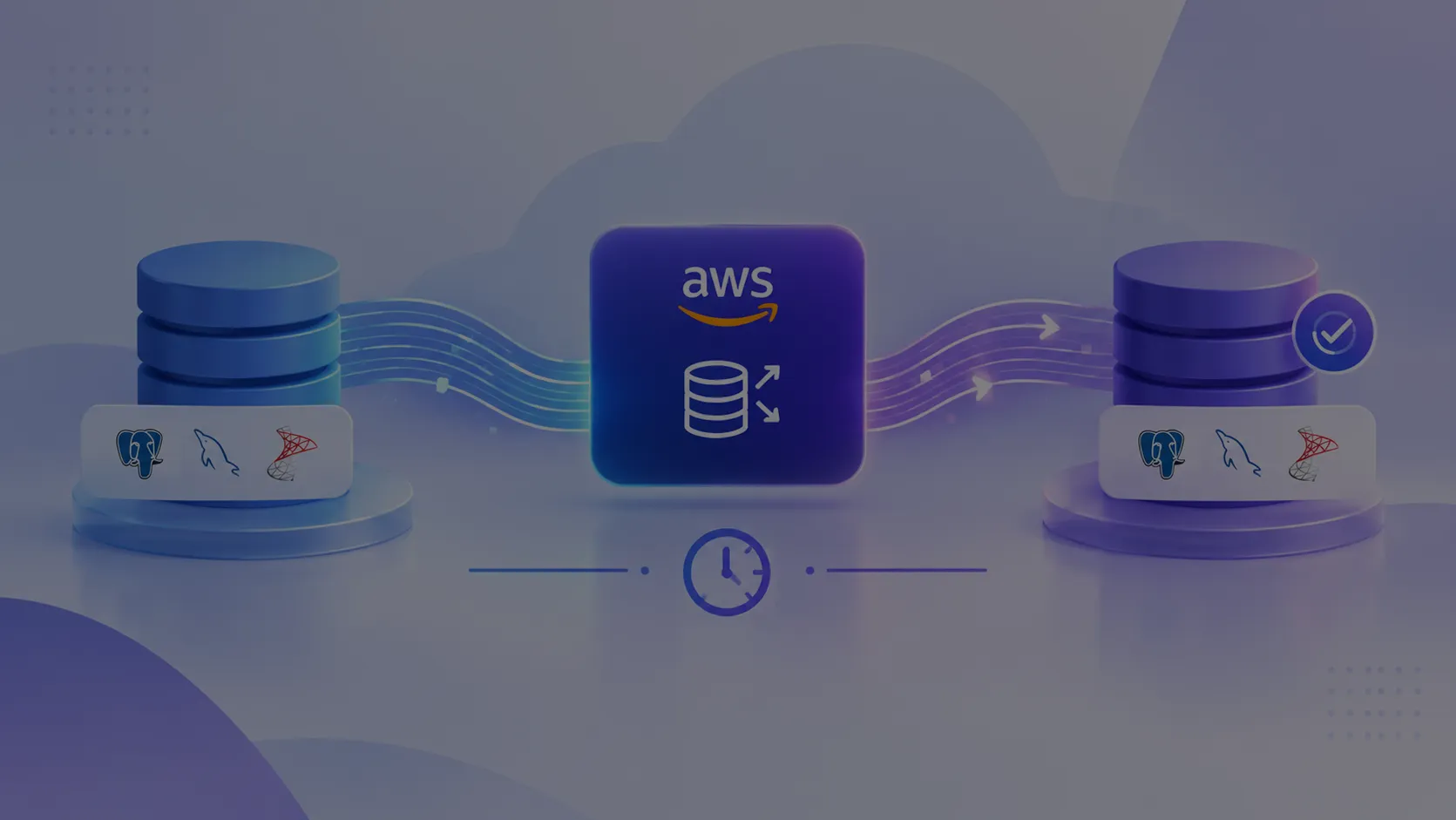
Migrating Databases with AWS DMS With Nearly Zero Downtime
Learn how to migrate databases using AWS DMS with nearly zero downtime using Full Load, CDC, validation, monitoring, and controlled cutover.
Read More
How to Add LiveKit Video Calling to a Next.js App
Add embedded video & audio calling to Next.js with LiveKit Cloud. Compared vs Twilio, Daily, Agora, Zoom — plus token auth, guests & recording.
Read More
We chose ECS over EKS: what we gained and what we gave up
An honest comparison of ECS vs EKS the costs, tradeoffs, and real-world reasoning behind choosing ECS for a production platform on AWS.
Read More