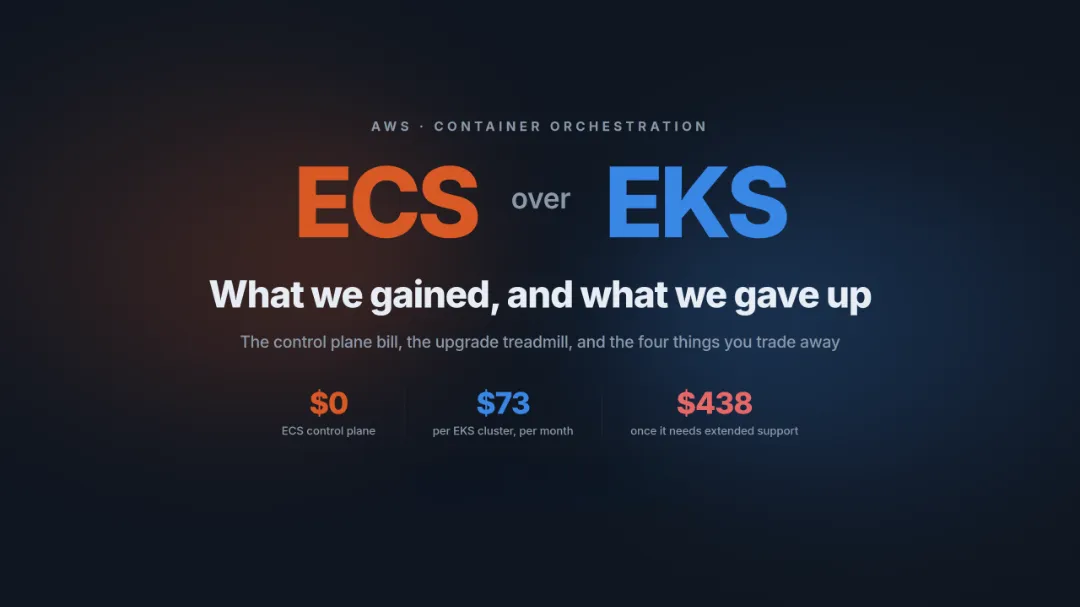
We chose ECS over EKS: what we gained and what we gave up

Got a project?
Let's discuss your project
Introduction
We chose ECS over EKS for a production platform, and I still think it was the right call.
Not because Kubernetes was too hard. I run Kubernetes workloads on EKS and on GKE. It was because that platform did not need what Kubernetes charges you for. Here is the honest ledger both columns.
What we gained
No control plane bill
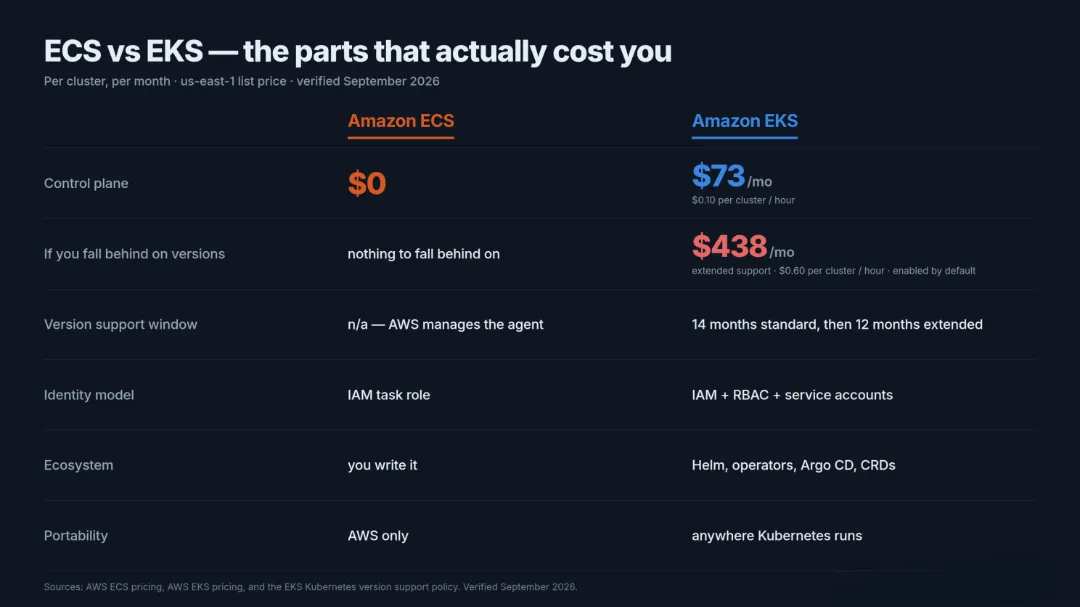
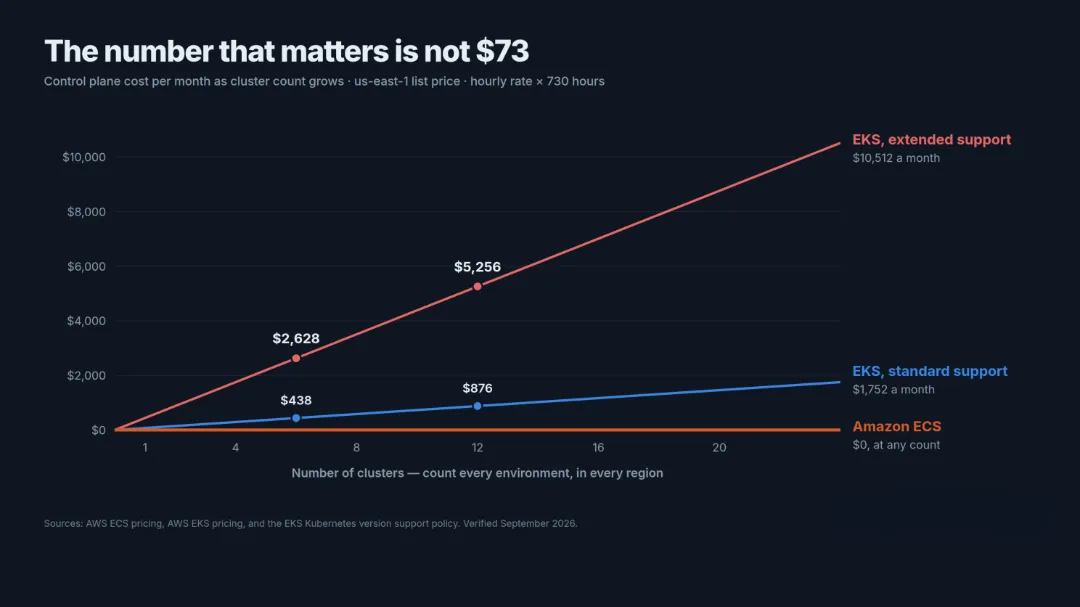
ECS orchestration costs nothing; you pay only for the EC2 or capacity underneath it. EKS is $0.10 per cluster per hour, roughly $73 a month. That is per cluster, and cluster count is the number nobody says out loud every environment, in every region, plus the shared ones. Twelve clusters is $876 a month before a single container starts.
No version treadmill
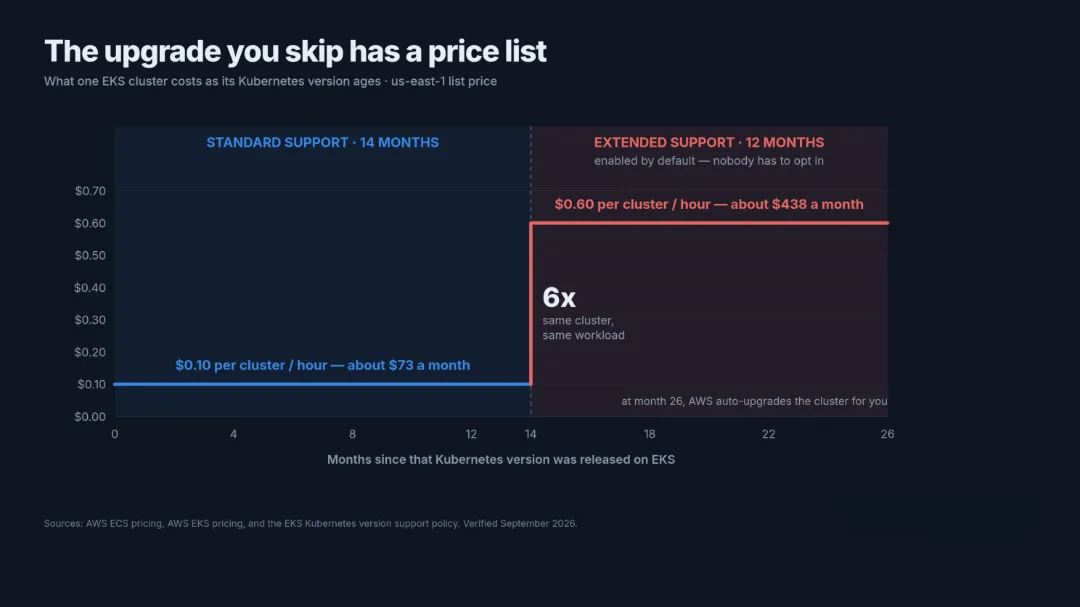
An EKS Kubernetes version gets 14 months of standard support, then 12 months of extended support. Extended support is enabled by default and costs $0.60 per cluster per hour roughly $438 a month. Fall two upgrade windows behind and the same cluster costs six times more while doing exactly the same work. Those twelve clusters become $5,256 a month, and nobody had to approve anything for that to happen. ECS has no Kubernetes version for you to chase.
Fewer moving parts to secure
A task role per task, a security group per service, a target group on the load balancer. No CNI plugin decision, no admission controllers, no RBAC model layered on IAM. Every component you do not run is a component nobody has to review at audit time.
What we gave up
Portability
A task definition is an AWS artifact. A Kubernetes manifest is not.
The ecosystem
No Helm chart, no operator, no Argo CD, no CRD for the thing you need next quarter. You open an editor instead. That is the point where the trade-off stops being theoretical.
Scheduling
ECS placement strategies are good enough for most workloads. They are not the Kubernetes scheduler, and if you need topology-aware placement or a custom scheduler, you will find the ceiling.
Hiring signal
The market asks for Kubernetes. A job advert is not interested in your reasoning.
Let's Build Something Great Together
Ready to transform your idea into a powerful software solution? Talk to our experts and get a free consultation.
Contact Us
Run it on your own account
Clusters × 730 hours × $0.10 then add the extended-support rate for anything you already know you will not upgrade on time.
If that number is smaller than the cost of the Kubernetes expertise already on your team, EKS is the right call and you can stop reading comparisons. If it is larger, the question is not which service is better. It is whether you are buying capability you will use, or optionality you will never exercise.
"The mistake is not choosing ECS. The mistake is choosing either one without writing down the second column."
Which way did you go and would you make the same call again?

How to Add LiveKit Video Calling to a Next.js App
Add embedded video & audio calling to Next.js with LiveKit Cloud. Compared vs Twilio, Daily, Agora, Zoom — plus token auth, guests & recording.
Read More
Upgrading Legacy Systems: From Outdated Technology to Competitive Advantage
Learn how to upgrade legacy systems through application modernization, API integration, cloud migration, security improvements, and incremental system upgrades without disrupting business operations.
Read More
Building Distributed Tracing and Observability with AWS X-Ray
A practical guide to correlating requests across a multi-tier application using correlation IDs, AWS X-Ray segments, and structured logging for faster incident debugging.
Read More
Designing Before and After AI: What Really Changed
A look at how AI has transformed UI/UX design from manual wireframes and slow research to AI-assisted prototyping, design-to-code, and personalization at scale.
Read More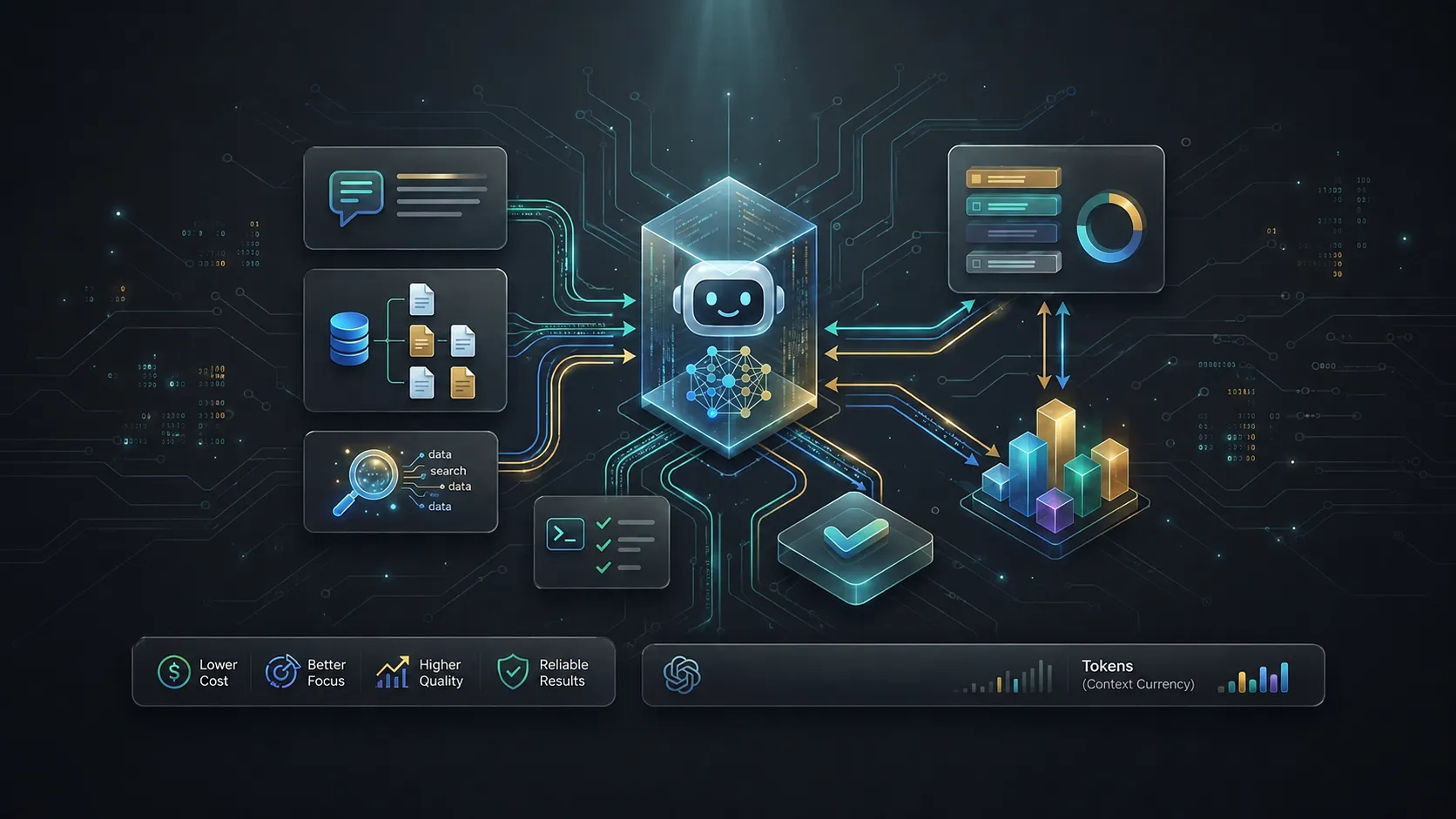
Beyond Prompting: Managing Context and Tokens in AI Coding Tools
Ever wondered why your AI coding agent starts losing context or hits a hard limit mid-task? The answer lies in tokens and the context window. Good AI coding is not about giving the model the most information. It is about giving it the right information at the right time.
Read More
What Is llms.txt? How It Helps Google, AI Search, and Agentic Browsing Find Your Website
Learn what llms.txt is, how it differs from sitemap.xml and robots.txt, and how it can help your site get found by Google, AI search tools, and AI agents.
Read More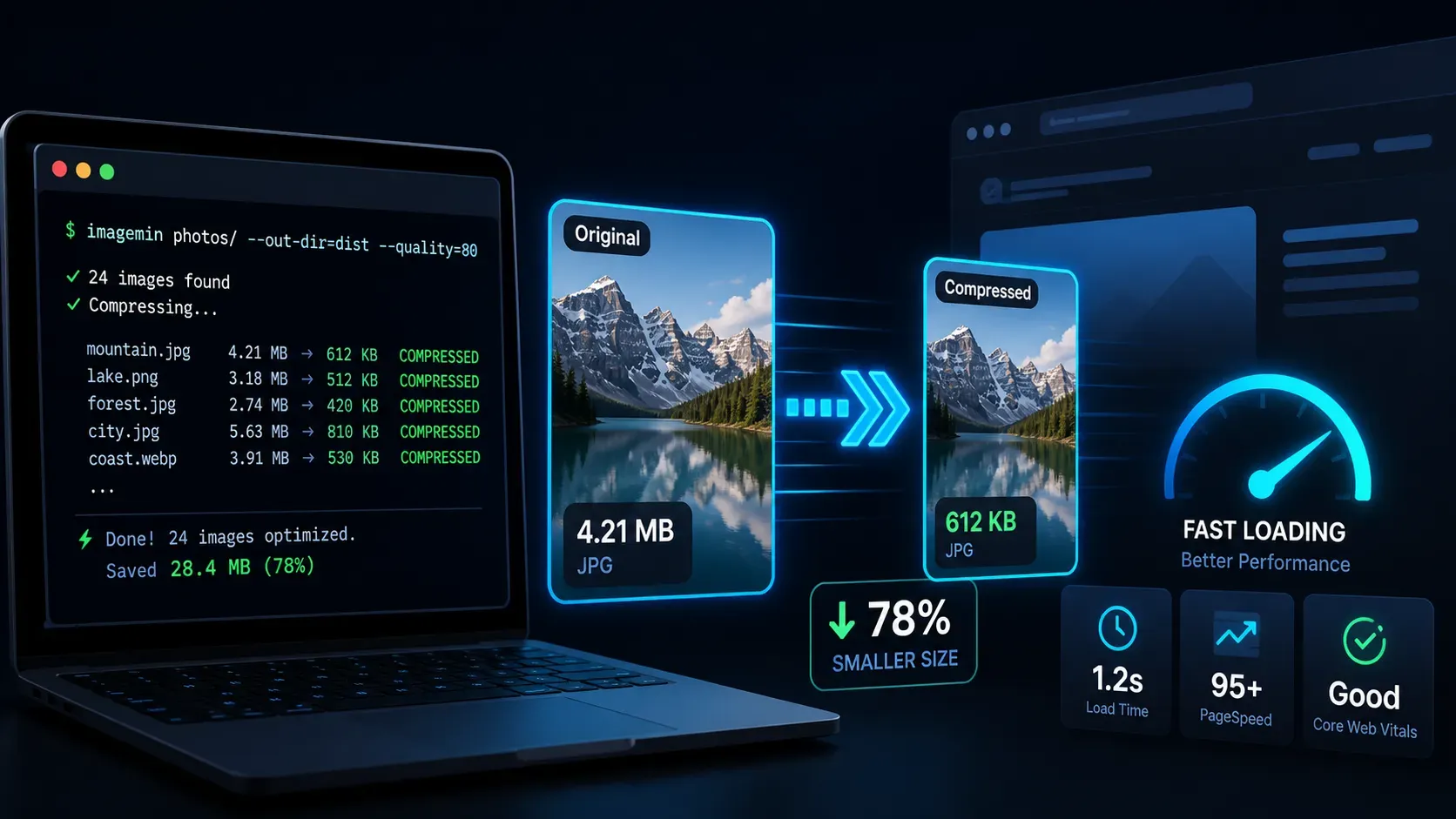
Build an Automated Image Compression Script with Sharp and SVGO
Compress images from the terminal with a Node.js script powered by Sharp and SVGO a safe, two-step workflow that keeps your site fast without bloating your repo.
Read More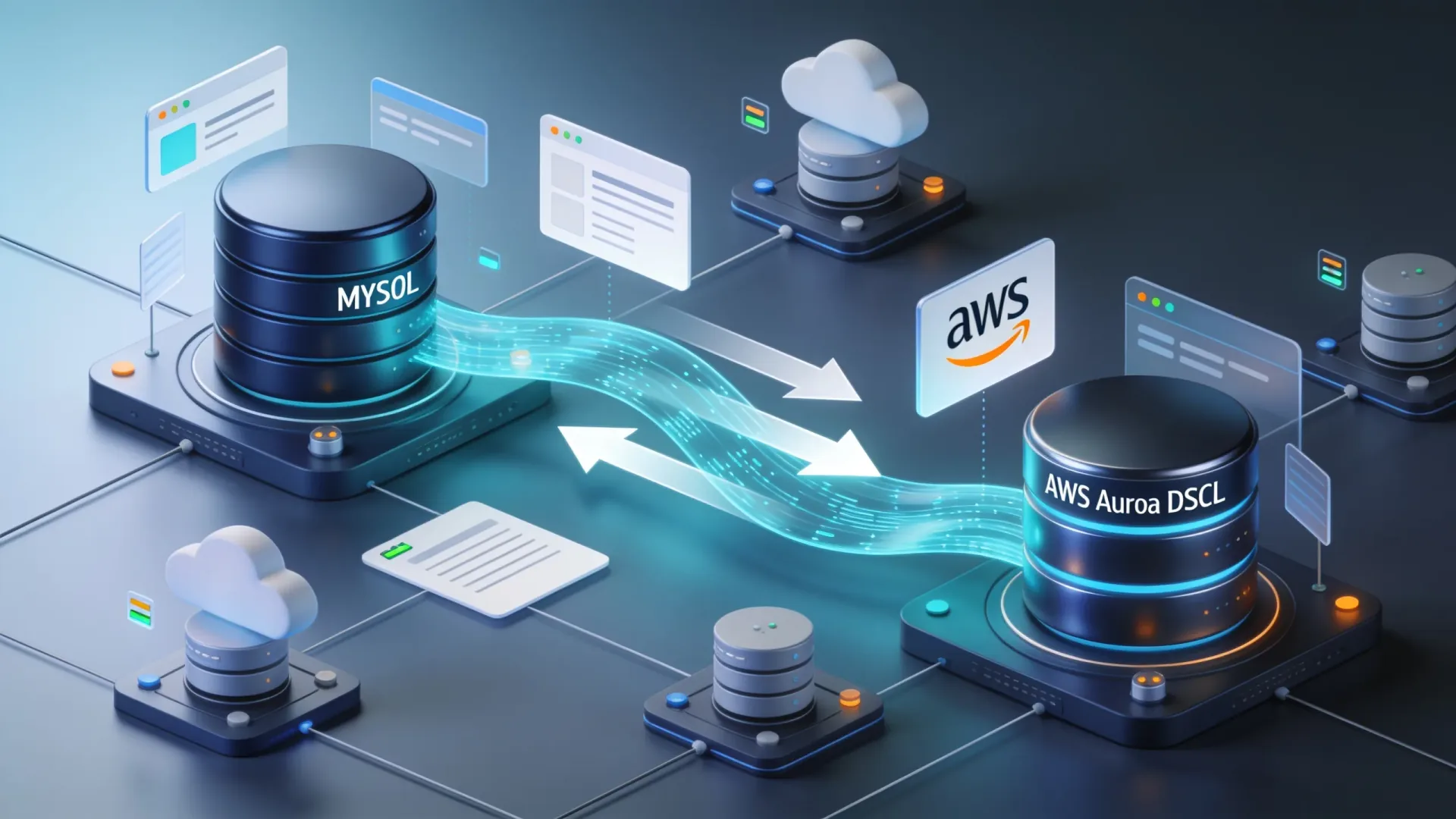
The Right Way to Migrate from MySQL to AWS Aurora DSQL
Migrating a production database is one of the highest-risk changes you can make to an application. Moving from MySQL to AWS Aurora DSQL raises the stakes further...
Read More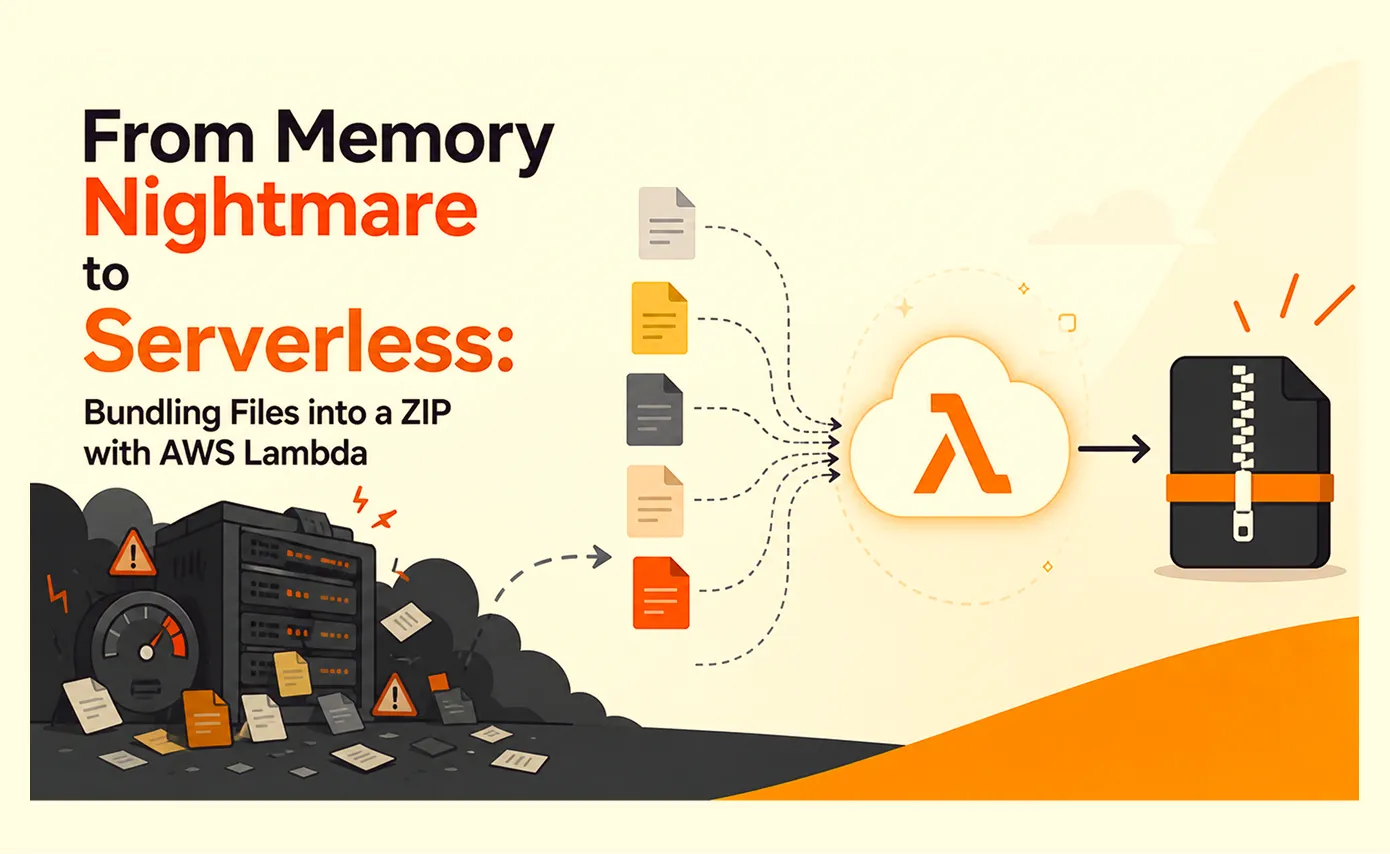
From Memory Nightmare to Serverless: Bundling Files into a ZIP with AWS Lambda
A straightforward 'download all these files as one ZIP' request that worked perfectly on my laptop and... fell over the first day it met real production load. Here's the debugging story, the scaling options I ruled out, and why AWS Lambda was the right answer.
Read More