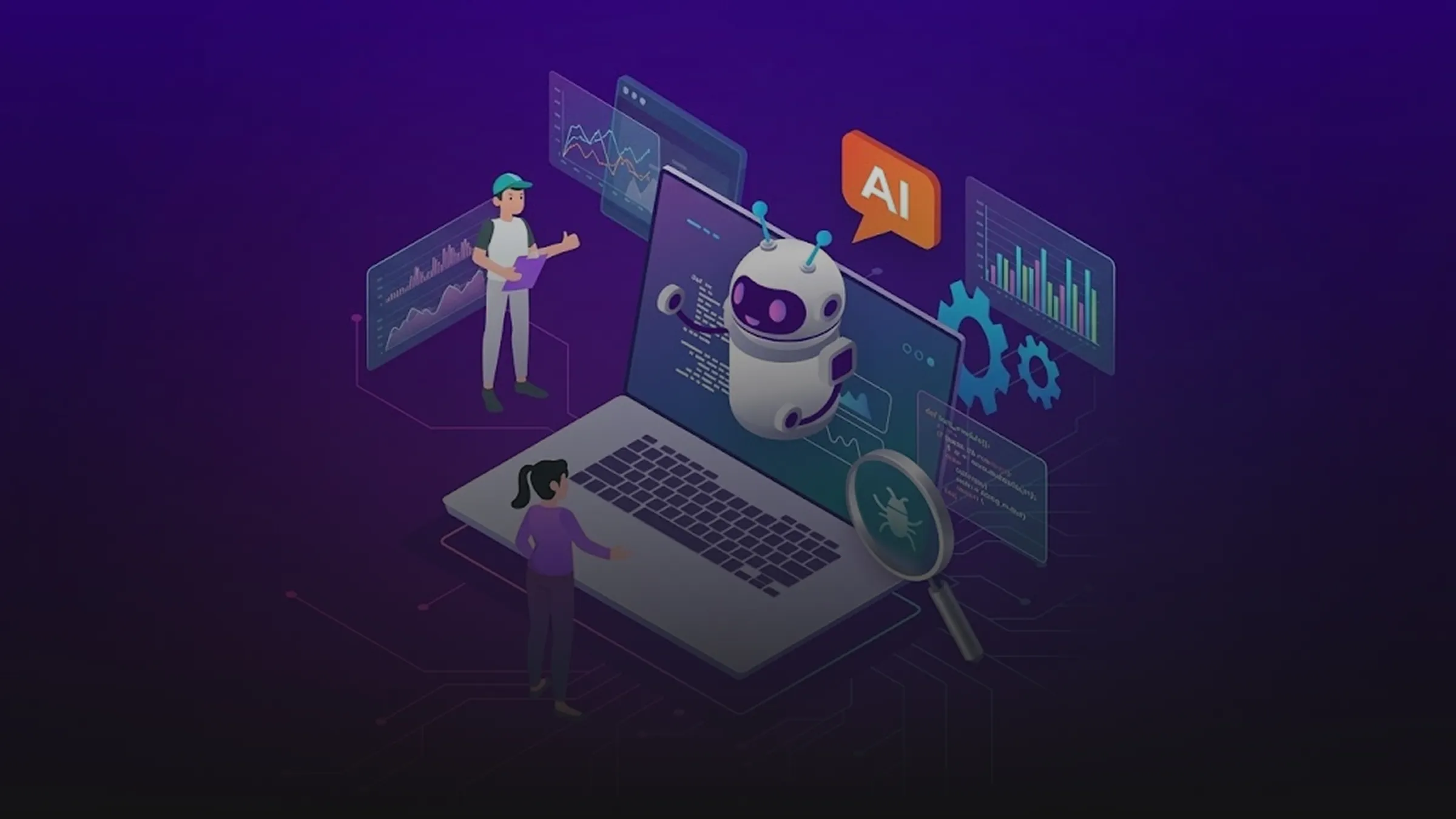
10 AI Prompts Every Manual Tester Should Have in Their QA Toolkit

Got a project?
Let's discuss your project
Introduction
Imagine you receive a new feature at 10 AM.
The requirement is three paragraphs long.
The developer says it is ready for testing.
You have two days before release.
There are already 80 test cases in the regression suite.
And somewhere in your head, one question keeps coming back:
"What am I forgetting?"
This is where AI can become surprisingly useful for a manual tester.
Not because AI can replace your testing skills. It can't.
The real advantage is that AI can help you think of more possibilities, challenge your assumptions, analyze information faster, and turn messy QA work into something structured.
And you don't need to become an AI expert to start.
You need the right prompts.
Here are 10 prompts that can actually become part of your day-to-day SQA workflow.
1. Don’t Ask AI to “Write Test Cases”, Ask It to Break the Requirement
One of the most common ways testers use AI is:
"Generate test cases for this requirement."
That is okay.
But you are leaving a lot of value on the table.
A better approach is to make AI attack the requirement before you start testing it.
Try This:
Act as a senior QA engineer reviewing this requirement. Do not generate test cases yet. First, break the requirement into business rules, assumptions, dependencies, validations, possible ambiguities, and areas where defects are likely to occur. Tell me what questions I should clarify with the BA or product owner before testing.
Requirement: [Paste requirement]
Why this is useful
This can turn AI into your pre-testing review partner.
Instead of immediately creating 30 test cases, you first understand:
- What the requirement actually says
- What it doesn’t say
- What assumptions you are making
- Which rules could conflict
- What needs clarification
- Where defects are most likely
That is a much better starting point than blindly writing test cases.
2. Give AI a Feature and Ask: “How Would You Break This?”
Here is a simple habit that can dramatically change exploratory testing.
Before you start testing a feature, give the requirement to AI and ask it to think like a tester who is actively trying to break the application.
Prompt
Act as a skeptical senior manual tester. Your goal is to break this feature, not prove that it works. Think about incorrect user behavior, unusual sequences, invalid data, boundary conditions, duplicate actions, interruptions, refreshes, permissions, timing issues, and unexpected states. Give me practical things I can try manually to expose defects.
Feature: [Paste feature description]
Imagine testing a checkout page
A normal test might be:
Add product → enter payment details → click Pay → order succeeds
But a “break it” mindset asks:
- What happens if I click Pay twice?
- What happens if I refresh during payment?
- What happens if the payment succeeds but the confirmation page does not load?
- What if my session expires?
- What if the product becomes unavailable during checkout?
- What if I change the quantity in two browser tabs?
- What if I press Back after payment?
- What if the network disconnects at the exact moment I click Pay?
That is where AI becomes interesting for a tester.
It can help you generate the questions you should be asking.
3. Turn One Requirement Into a Testing Attack Map
Sometimes a requirement looks simple:
"Users can upload a profile picture."
Simple?
Not really.
There are file types, sizes, names, permissions, storage, previews, failures, replacements, cancellations, and network conditions hiding behind that one sentence.
Instead of asking AI for test cases, ask it to map the attack surface of the feature.
Prompt
Analyze this feature from a manual testing perspective. Break it into input, UI behavior, business rules, data handling, permissions, integrations, error handling, and user workflows. For each area, tell me what could go wrong and what I should investigate manually.
Feature: [Feature]
Now you have a mental map of the feature before you even open the application.
4. Paste Your Test Cases and Ask AI: “What Am I Missing?”
This is one of the most practical uses of AI for an experienced tester.
You have already written your test cases.
Do not ask AI to rewrite them.
Ask it to challenge them.
Prompt
Review these test cases as a senior QA reviewer. Do not rewrite them. Instead, identify what is missing. Look specifically for untested business rules, negative scenarios, boundary conditions, state transitions, permissions, data combinations, error handling, concurrency, and recovery scenarios. For every gap, explain what risk it could expose.
Test cases: [Paste your test cases]
This is essentially giving yourself a second QA reviewer on demand. And there is an important difference:
You are not asking AI:
"Are my test cases good?"
You are asking:
"Find the holes in my thinking."
That is much more powerful.
5. Use AI When You’re Stuck on “What Else Should I Test?”
Every tester has experienced this. You have tested the obvious flows. Everything passes. You look at the screen and think:
"Okay... what else?"
This is where AI can become your brainstorming partner.
Prompt
I have already tested the obvious happy paths for this feature. Help me go beyond them. Give me new testing ideas based on user behavior, application state, data combinations, interruptions, navigation, permissions, integrations, timing, and recovery. Avoid repeating common happy-path scenarios.
Feature: [Feature]
Already tested: [Your current scenarios]
The last line is important.
Tell AI what you have already tested.
Now it has something to work against instead of generating another generic list.
6. Turn a Bug Into More Testing
Here is an underrated AI workflow.
You find a bug.
Most testers report it and move on.
But a bug can be a clue that similar bugs may exist elsewhere.
Suppose you discover:
"Users can submit the form twice by double-clicking the Save button."
Do not just fix that one case.
Ask AI:
Prompt
I found the following defect. Think beyond this exact bug. Identify other areas, workflows, UI controls, or features where the same underlying problem could potentially occur. Explain what I should test manually to determine whether this is an isolated defect or part of a larger pattern.
Defect: [Paste defect]
Now one bug can generate an entire follow-up testing strategy.
That is much more valuable than simply improving the wording of a Jira ticket.
7. Give AI Your Bug Notes Before Writing the Jira Ticket
AI can also save time on one of the less exciting parts of QA: documentation. You do not need to spend 15 minutes turning rough notes into perfect sentences. Give AI the raw information.
Prompt
Turn these raw QA notes into a developer-friendly defect report. Preserve only the information I provide. Do not invent missing details. Include a concise title, preconditions, reproduction steps, expected result, actual result, environment information, and questions where information is missing.
My notes: [Paste notes]
The important instruction is:
"Do not invent missing details."
You want AI to structure your observations, not manufacture evidence.
8. Use AI to Build Smarter Regression Testing
Regression testing can become repetitive.
Let's Build Something Great Together
Ready to transform your idea into a powerful software solution? Talk to our experts and get a free consultation.
Contact Us
But the bigger problem is not repetition.
It is knowing what deserves regression testing after a change.
Suppose the developer changes the password reset functionality.
Instead of asking:
"Generate regression test cases."
Try:
Prompt
A developer changed the following functionality. Analyze what could be indirectly affected by this change. Consider shared components, authentication flows, database changes, APIs, notifications, permissions, user states, and integrations. Create a risk-based regression checklist and explain why each area may be affected.
Change: [Describe change]
This helps you move from:
"Run the entire regression suite."
To:
"What could this change realistically have affected?"
9. Turn Production Bugs Into New Test Scenarios
Production bugs are valuable testing information.
If a real customer discovered something, there is a good chance your test strategy can learn from it.
Give AI the production issue and ask:
Prompt
Analyze this production defect from a QA perspective. Identify the condition that allowed it to reach production, then suggest additional test scenarios, test data, regression coverage, and edge cases that could help prevent similar defects in the future. Also identify whether the issue suggests a gap in requirements, test coverage, validation, or user-flow testing. Production issue: [Paste issue]
Now AI is not just helping you document yesterday’s bug. It is helping you ask:
How do we stop this class of bug from happening again?
That is where AI starts becoming genuinely valuable to QA.
10. Make AI Your Pre-Release QA Reviewer
This might be the most useful prompt in the entire toolkit.
Before signing off a feature, give AI everything you know:
- Requirement
- Major changes
- Test cases
- Bugs found
- Bugs fixed
- Known limitations
- Regression areas tested
Then ask it to challenge your release readiness, not to make the decision for you.
Prompt
Act as a senior QA reviewer conducting a pre-release review. Based only on the information below, identify potential testing gaps, unresolved risks, untested scenarios, assumptions, and areas that deserve additional verification before release. Separate confirmed facts from areas that require investigation. Do not decide whether the release should go ahead; give me the questions I should answer before making that decision. Requirement: [Paste] Changes: [Paste] Testing performed: [Paste] Known defects/limitations: [Paste]
Think about what this gives you. You have effectively created a second reviewer who does not get tired of asking questions.
The Real AI Advantage for Manual Testers
Notice something about these prompts. Most of them are not:
"AI, write my test cases."
That is because test-case generation is only one small part of what AI can do for QA.
The more interesting use cases are:
- AI as a requirement challenger.
- AI as an exploratory testing partner.
- AI as a second pair of eyes.
- AI as a regression analyst.
- AI as a bug-pattern detector.
- AI as a test-review partner.
And most importantly: AI as a tool that helps you think of things you may not have thought of yourself.
But Here’s the Catch
Do not blindly copy AI-generated test cases into your test management tool. That is not intelligent QA.
AI does not know your application the way you do.
It does not know which business rule your product manager mentioned in yesterday’s meeting. It does not know that a particular legacy API behaves strangely. It does not know which customer workflow is business-critical unless you tell it.
You bring the product knowledge. AI brings another perspective.
The best results happen when you combine the two.
A Simple AI Workflow You Can Start Tomorrow
You do not need to change your entire QA process.
Try this with your next feature:
Before Testing
Give AI the requirement and ask:
"What assumptions and ambiguities should I clarify?"
Before Writing Test Cases
Ask:
"How could this feature fail?"
After Writing Test Cases
Ask:
"What am I missing?"
During Exploratory Testing
Ask:
"I’ve tested these scenarios. Give me non-obvious things to investigate."
After Finding a Bug
Ask:
"Where else could this same type of defect exist?"
Before Release
Ask:
"What risks or gaps should I investigate before sign-off?"
That is it. You do not need 50 AI tools. You do not need to become a prompt engineer. You just need to start treating AI as another person sitting beside you during testing, one whose job is to keep asking:
"Did you think about this?"
That is where AI starts becoming a real part of your QA toolkit.

The Website Accessibility Revolution: Why You Can't Afford to Ignore WCAG 2.2
Website accessibility starts with WCAG 2.2. Learn how accessible design, development, QA, and testing can help create websites that work for everyone.
Read More
Race Conditions in Web Applications: Why Correct Code Produces Wrong Results
Race conditions silently corrupt data when concurrent requests touch shared state at the wrong time. Learn how atomic updates, transactions, idempotency, and locking keep your application correct under real concurrency.
Read More
AI Writes the Code • Stop Blindly Shipping It Without Reviewing the Engineering
A practical perspective on AI-generated code, scalability, maintainability, and engineering judgment and why engineering review still owns the final decision.
Read More
Migrating Databases with AWS DMS With Nearly Zero Downtime
Learn how to migrate databases using AWS DMS with nearly zero downtime using Full Load, CDC, validation, monitoring, and controlled cutover.
Read More
How to Add LiveKit Video Calling to a Next.js App
Add embedded video & audio calling to Next.js with LiveKit Cloud. Compared vs Twilio, Daily, Agora, Zoom — plus token auth, guests & recording.
Read More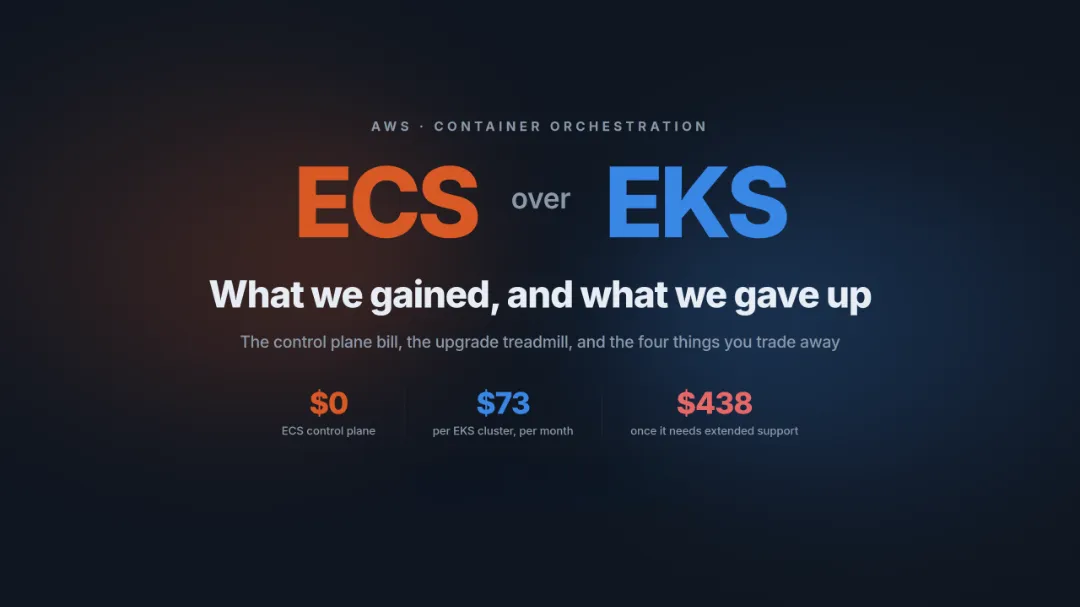
We chose ECS over EKS: what we gained and what we gave up
An honest comparison of ECS vs EKS the costs, tradeoffs, and real-world reasoning behind choosing ECS for a production platform on AWS.
Read More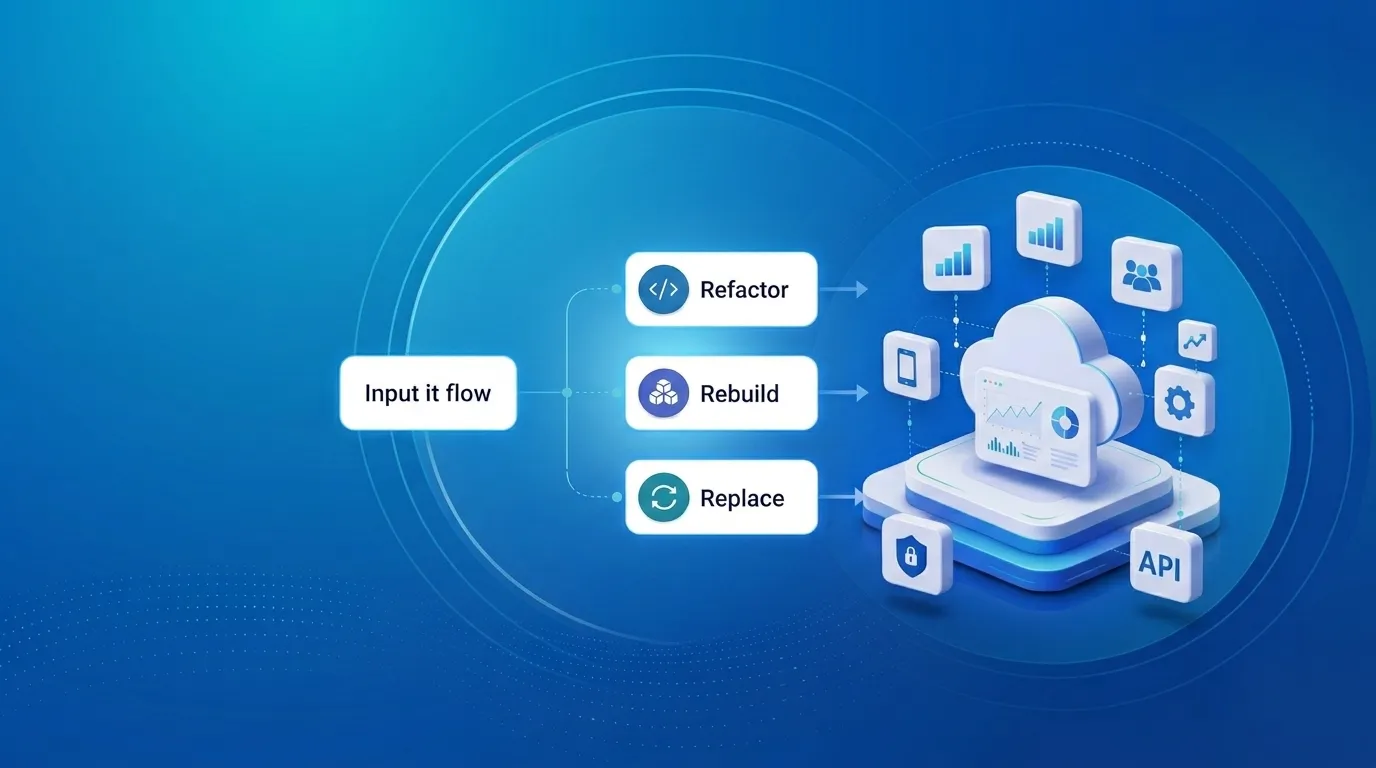
Upgrading Legacy Systems: From Outdated Technology to Competitive Advantage
Learn how to upgrade legacy systems through application modernization, API integration, cloud migration, security improvements, and incremental system upgrades without disrupting business operations.
Read More
Building Distributed Tracing and Observability with AWS X-Ray
A practical guide to correlating requests across a multi-tier application using correlation IDs, AWS X-Ray segments, and structured logging for faster incident debugging.
Read More
Designing Before and After AI: What Really Changed
A look at how AI has transformed UI/UX design from manual wireframes and slow research to AI-assisted prototyping, design-to-code, and personalization at scale.
Read More