
How to Build a SaaS MVP (Step-by-Step): A Complete Guide for Startups

Got a project?
Let's discuss your project
Introduction
Launching a Software-as-a-Service (SaaS) business takes more than a promising idea. To build a SaaS MVP, first validate a specific customer problem and confirm people are willing to pay for a solution. Building a complete platform before testing demand can consume months of work and a large budget.
A SaaS MVP (Minimum Viable Product) helps reduce that risk. It is an initial, usable version of a cloud-based application that contains the essential features needed to solve one clearly defined problem. Rather than attempting to deliver every feature on your long-term roadmap, you release a focused SaaS MVP, observe how customers use it, and improve it using real feedback.
Our SaaS MVP development services are designed to help teams navigate this process with a clear, practical approach.
What Is a SaaS MVP?
A SaaS MVP is the first functional release of a subscription-based or cloud-hosted software product. It provides enough value for a specific audience to complete an important task, without including every capability that may eventually be part of the complete software platform.
Imagine you want to create project management software. A mature project management platform might offer task management, team chat, workflow automation, advanced analytics, file sharing, and dozens of integrations. Your first release may only need account registration, project creation, task assignment, and progress tracking. Those features let a small team experience the product's central benefit and tell you what is missing.
An MVP is not a broken demo or an excuse to ignore quality. Its scope is limited, but its essential workflows should be secure, understandable, and reliable. The purpose of a SaaS MVP is to learn whether the problem is important, whether your solution helps, and what customers value enough to keep using.
Why Build a SaaS MVP Before a Full Product?
A focused first release offers several advantages:
- Validate demand: Put a working solution in front of potential customers and learn whether the problem is significant enough for them to change their habits or pay.
- Reduce initial costs: Spend on the essential workflow instead of building optional modules, complex reports, or integrations before they are needed.
- Launch sooner: A smaller scope can shorten the development cycle and help you learn from the market while competitors are still planning.
- Collect useful feedback: Observe where users succeed, where they get stuck, and which features they return to.
- Support business decisions: Early usage, retention, and payment signals can help you decide whether to refine the idea, change direction, or invest in growth.
How to Build a SaaS MVP: 10 Essential Steps
A successful SaaS MVP release begins with a clear problem and ends with a learning process. Use the following steps as a practical roadmap.
Step 1: Identify a Real Customer Problem
Start with the problem, not the feature list or technology. Look for a repeated frustration that affects a defined group and has a meaningful business or personal cost.
Research the problem through interviews, surveys, industry communities, competitor reviews, and observation of existing workflows. Ask people how they solve the issue today, what takes the most time, what they dislike about current tools, and what happens when the problem is not solved.
Outcome: Write a short problem statement describing who experiences the problem, what makes it difficult, and why solving it matters.
Step 2: Define Your Target Audience
Trying to serve everyone makes SaaS MVP decisions difficult. Choose a narrow initial audience so that you can design around a recognizable set of needs.
For an employee management SaaS MVP, the first audience might be small and medium-sized businesses with a dedicated HR manager. Another segment could be recruitment agencies or remote-first companies. These groups may need different workflows and have different budgets.
Create an ideal customer profile covering industry, company size, user roles, current tools, challenges, purchasing authority, and budget. Distinguish the buyer from the daily user.
Step 3: Research Competitors and Alternatives
Identify three to five direct competitors and review their main features, pricing, onboarding, user experience, integrations, and customer feedback. Look for recurring complaints and underserved needs, then position your SaaS MVP around a gap customers care about.
Step 4: Prioritize the Essential Features
Feature overload is a common cause of delays and budget growth. List everything users might want, then separate it into:
- Must-have: Required to solve the primary problem.
- Should-have: Helpful, but not necessary for the first release.
- Could-have: Optional improvements to consider after launch.
- Won't-have for now: Outside the current scope.
For a project management tool, account creation, project setup, task assignment, and status tracking may be must-haves. Advanced analytics, AI recommendations, and numerous third-party integrations may wait.
When you build a SaaS MVP, the goal is not to minimize the number of features at any cost. It is to include the smallest coherent set that delivers the promised value. Each included capability still needs to work properly.
Step 5: Map User Flows and Design the Experience
Plan how a customer moves through the product before detailed implementation begins. Keep the interface clear and consistent. Use understandable labels, visible calls to action, responsive layouts, readable typography, accessible contrast, and helpful error messages. Avoid decorative complexity that distracts from the core task.
Step 6: Choose an Appropriate Technology Stack
Choose technologies based on your SaaS MVP requirements, team experience, budget, security needs, and expected growth, not simply because a framework is popular.
Options include:
- Frontend: React, Next.js, Vue, or Angular for the user interface.
- Backend: Node.js with Express or NestJS, Python with Django or FastAPI, Java with Spring Boot, or PHP with Laravel.
- Database: PostgreSQL or MySQL for relational data; MongoDB or DynamoDB for use cases suited to document or key-value storage.
- Cloud platform: AWS, Microsoft Azure, or Google Cloud for compute, storage, networking, databases, and managed services.
- Supporting tools: Docker for containerization, Redis for caching where needed, a payment provider such as Stripe, and GitHub Actions or AWS CodePipeline for CI/CD.
Step 7: Plan the Backend, Data, and Multi-Tenancy
The backend applies business rules, handles API requests, manages authentication, and communicates with the database. Map the frontend, API, access controls, database, storage, payments if required, notifications, and hosting environment.
Design the data model around your product's real entities. Depending on the requirements, these might include users, organizations, teams, roles, permissions, subscriptions, payments, projects, and audit records.
If multiple businesses will use one SaaS MVP, plan for multi-tenancy from the start. Each organization must only access the records it is authorized to see. Common approaches include shared tables with tenant identifiers, separate schemas, or separate databases. Your SaaS MVP architecture should account for tenant isolation, compliance, scale, and operational cost.
Enforce authorization in backend services and database queries. Hiding another customer's data in the frontend is not sufficient protection.
Step 8: Develop the Core Workflows
Build the SaaS MVP in small, testable increments. Start with the workflow that delivers the main customer outcome, complete and test it, and only then add supporting capabilities.
Typical implementation areas include:
- Authentication: Registration, login, logout, password recovery, and email verification. Add multi-factor authentication or single sign-on if the audience requires it.
- User and organization management: Profiles, teams, roles, and permissions, with appropriate tenant-level access checks.
- Core functionality: The main business capability, for example contact and pipeline management in a CRM, tasks and assignments in project software, or employee records in an HR tool.
- Necessary integrations: Payment processing, transactional email, or another external service when it is essential to the initial customer journey.
- Subscription handling: If customers pay for access, plan for billing intervals, trials if offered, upgrades, cancellations, and billing history.
- Frontend-backend integration: Connect screens to APIs and test complete user journeys, including creating, viewing, updating, and deleting permitted records.
Step 9: Build in Security and Quality Assurance
Security is not an optional later feature. Even an early SaaS MVP may hold personal information, business records, or payment-related data.
Use HTTPS, secure authentication, server-side authorization, input validation, and appropriate encryption. Keep credentials out of source code, apply least privilege, maintain logs, and establish tested backups.
Test the SaaS MVP at several levels:
- Unit tests check individual functions or components.
- Integration tests verify that services work together.
- Functional tests confirm that features meet requirements.
- Performance tests assess behavior under expected workloads.
- Security tests look for vulnerabilities and access-control gaps.
- User acceptance tests confirm that real users can complete their tasks.
Before launch, test critical journeys from beginning to end. A new customer should be able to register, sign in, reach the dashboard, complete the main task, and see the result saved correctly. Also test tenant boundaries, error states, and recovery from common failures.
Step 10: Deploy, Launch, and Learn
Prepare a production environment, configure the database and secrets, deploy frontend and backend services, connect the domain and SSL certificate, and enable monitoring and backups. Run production smoke tests before inviting customers.
Let's Build Something Great Together
Ready to transform your idea into a powerful software solution? Talk to our experts and get a free consultation.
Contact Us
A CI/CD pipeline can automate builds, tests, and deployments when code changes are pushed to a repository. Automation reduces repetitive manual work and makes releases more consistent. After deployment, monitor application health, error rates, resource usage, and important user journeys.
Start with a small group of early users if possible. Collect feedback through interviews, support requests, surveys, in-app forms, and usage analytics. Find out which features people use, where they abandon a workflow, and what prevents them from receiving value.
The objective is not simply to launch. It is to learn whether the SaaS MVP solves the problem in real conditions and what should change next.
Planning your SaaS MVP? Book a Free SaaS MVP Consultation
What Features Should a SaaS MVP Include?
The right feature set depends on the product category and business model. Many applications need a foundation such as:
| Capability | Purpose | Priority |
|---|---|---|
| Authentication | Secure account access | Essential |
| Dashboard | Entry point to key tasks | Usually essential |
| Core workflow | Solves the main customer problem | Essential |
| Database integration | Stores application data | Essential |
| User and role management | Controls access | Depends on the product |
| Responsive interface | Supports different screen sizes | Essential |
| Error handling | Helps maintain reliability | Essential |
| Basic analytics | Tracks important activity | Useful |
| Payments | Supports paid subscriptions | Business-dependent |
| Email notifications | Communicates key events | Business-dependent |
| Advanced reports and integrations | Extends functionality | Often later |
Treat this as a starting point, not a universal checklist. A financial SaaS MVP may need additional controls, while a simple internal workflow tool may not need subscription billing at launch. Include features based on customer needs and legal or operational requirements.
How Much Does It Cost to Build a SaaS MVP?
Costs depend on scope, design complexity, integrations, team location and experience, infrastructure, and testing requirements. The following are broad planning estimates, not guaranteed market prices:
| Project scope | Illustrative development cost |
|---|---|
| Simple SaaS MVP with a few core workflows | $5,000-$10,000 |
| Medium-complexity SaaS MVP | $10,000-$25,000 |
| Complex SaaS MVP with multiple modules | $25,000-$50,000+ |
A basic application with login, a dashboard, and a small number of workflows will generally require less effort than a multi-tenant SaaS MVP with complex permissions, real-time features, or external integrations.
Budget for more than coding. Discovery, UI/UX design, backend and frontend work, cloud hosting, testing, security, deployment, and maintenance all contribute to the total. Hosting costs vary with compute, storage, database usage, traffic, and monitoring. Ask development teams to define assumptions and exclusions in their estimates so that proposals can be compared fairly.
How Long Does It Take to Build a SaaS MVP?
A focused SaaS MVP may take around four to eight weeks; a medium-complexity one may take eight to twelve weeks or longer. Complex platforms can require several months. These are indicative ranges, not commitments.
A typical plan allocates time to discovery, design, architecture, frontend and backend implementation, integration, testing, and deployment. Some tasks can run in parallel, so calendar time is not simply the sum of each estimate.
Clear requirements, quick decisions, access to stakeholders, and a focused scope help avoid delays. Agree on milestones and acceptance criteria before development begins.
Common Mistakes to Avoid
- Building too many features: Trying to match mature competitors can make the first release slow and expensive. Keep the scope tied to the primary customer outcome.
- Skipping customer research: A SaaS MVP based only on assumptions may solve a problem customers do not consider important. Speak with potential users before and during development.
- Choosing technology without a reason: A fashionable stack may not suit your team's skills or operational needs. Select tools that meet the requirements and can be maintained.
- Treating security as an afterthought: Plan authentication, authorization, tenant separation, secrets, and backups as part of the architecture.
- Launching without testing: Broken workflows and data errors can undermine trust. Test the journeys customers rely on most.
- Assuming launch is the finish line: A release begins the learning cycle. Monitor usage, respond to issues, and prioritize improvements using evidence.
- Overengineering for hypothetical scale: Avoid premature complexity, but use clean code, sensible data design, and documented interfaces so the product can evolve.
How to Measure Early Success
A SaaS MVP should be measured by customer outcomes, not by its number of features. Choose a small set of metrics that show whether customers receive value:
- Acquisition: How many qualified people sign up or become paying customers?
- Activation: What percentage complete the first meaningful action?
- Retention: Do users return and continue using the product?
- Monthly recurring revenue (MRR): How much predictable subscription revenue is generated each month?
- Churn: What percentage of paying customers cancel during a period?
- Customer feedback: What do users say about the value, usability, and missing capabilities?
What Happens After Launch?
Your SaaS MVP should be the starting point for a product that improves over time, not a miniature version of every feature you hope to build someday.
After launch, review your metrics and feedback regularly, fix the issues that block users first, and add features only when evidence shows customers need them. As usage and revenue grow, you can strengthen performance, security, and infrastructure, and expand the MVP step by step into a full SaaS platform with the right SaaS development services.
How Omax Tech Can Help You Build a SaaS MVP
Turning an idea into a production-ready application requires product planning, design, engineering, testing, and reliable cloud operations. Omax Tech helps startups and businesses turn software concepts into functional SaaS products.
Our work covers the key stages of the SaaS MVP lifecycle:
- Product discovery and planning: Understand your business goals, audience, customer challenges, and essential first-release scope. Define priorities and a practical roadmap.
- UI/UX design: Create wireframes and intuitive interfaces that make important tasks easy to discover and complete across devices.
- Frontend and backend development: Build responsive applications, APIs, authentication, database integrations, and the business workflows your customers need.
- Cloud infrastructure and DevOps: Configure suitable cloud environments, CI/CD pipelines, monitoring, and deployment processes.
- Testing and deployment: Verify important workflows and integrations, prepare the production environment, and support a controlled launch.
- Ongoing improvements: Use customer feedback and operational data to guide enhancements as requirements and usage grow.
See how we approached a real product in our SaaS scheduling software case study.
Our SaaS MVP development approach is based on a clear scope, practical engineering decisions, and a foundation that can be extended. The aim is to avoid unnecessary complexity while delivering a reliable first release.
As a SaaS MVP development company, we offer end-to-end MVP development services to help you move from idea to launch.
Frequently Asked Questions
What is the difference between a SaaS MVP and a prototype?
A prototype shows how a product might look or work and is often not functional. A SaaS MVP is a working product that real users can sign up for and use to solve a problem.
Can I build a SaaS MVP without coding?
No-code tools can work for simple ideas and early validation, but they can limit customization, multi-tenancy, and scaling. Many startups move to a custom build once the idea is validated.
How many features should a SaaS MVP have?
Only the smallest set needed to deliver the main customer outcome, usually one core workflow plus essentials like authentication and a dashboard.
Should a SaaS MVP support payments from day one?
If testing willingness to pay is part of your validation, yes. Otherwise, you can start with a free pilot and add subscription billing once demand is clear.
What happens if my SaaS MVP fails?
You will have learned what customers do not need at a fraction of the cost of a full product. Use the feedback to refine the idea, change direction, or target a different audience.
Final Thoughts
You do not need to develop every possible feature before introducing a SaaS MVP to customers. A focused first release helps you test demand, understand user needs, manage initial investment, and learn from real usage.
Start by identifying a meaningful problem and a specific audience. Research alternatives, prioritize essential capabilities, design the main user journeys, select a maintainable technology stack, and build with security and testing in mind. Then launch, measure results, and improve the product based on evidence.
The long-term opportunity comes from responding to customers, not from having the longest feature list on launch day. If you are preparing to build a SaaS MVP, keep the first scope focused and make sure it delivers one clear, valuable outcome.
You do not need to build everything at once. You need to build the right thing first.
Talk to Omax Tech About Your SaaS MVP: Start the conversation

When AI Tests the Software, Who Owns the Quality?
AI can execute thousands of tests, but can it own quality? Exploring why quality remains a shared human responsibility even as AI automates testing.
Read More
From ETL to ELT: The Evolution of Data Pipelines in Modern Analytics
How and why data pipeline architecture evolved from ETL to ELT.
Read More
Bridge View Hybrid: A Smarter Path to Bringing Web Apps to Mobile
Learn how the Bridge View Hybrid architecture uses a React Native shell and WebView to launch iOS and Android apps faster, cheaper, and with less risk.
Read More
10 AI Prompts Every Manual Tester Should Have in Their QA Toolkit
Discover 10 practical AI prompts manual testers can use to improve test coverage, find edge cases, analyze bugs, strengthen regression testing, and become more effective QA engineers.
Read More
The Website Accessibility Revolution: Why You Can't Afford to Ignore WCAG 2.2
Website accessibility starts with WCAG 2.2. Learn how accessible design, development, QA, and testing can help create websites that work for everyone.
Read More
Race Conditions in Web Applications: Why Correct Code Produces Wrong Results
Race conditions silently corrupt data when concurrent requests touch shared state at the wrong time. Learn how atomic updates, transactions, idempotency, and locking keep your application correct under real concurrency.
Read More
AI Writes the Code • Stop Blindly Shipping It Without Reviewing the Engineering
A practical perspective on AI-generated code, scalability, maintainability, and engineering judgment and why engineering review still owns the final decision.
Read More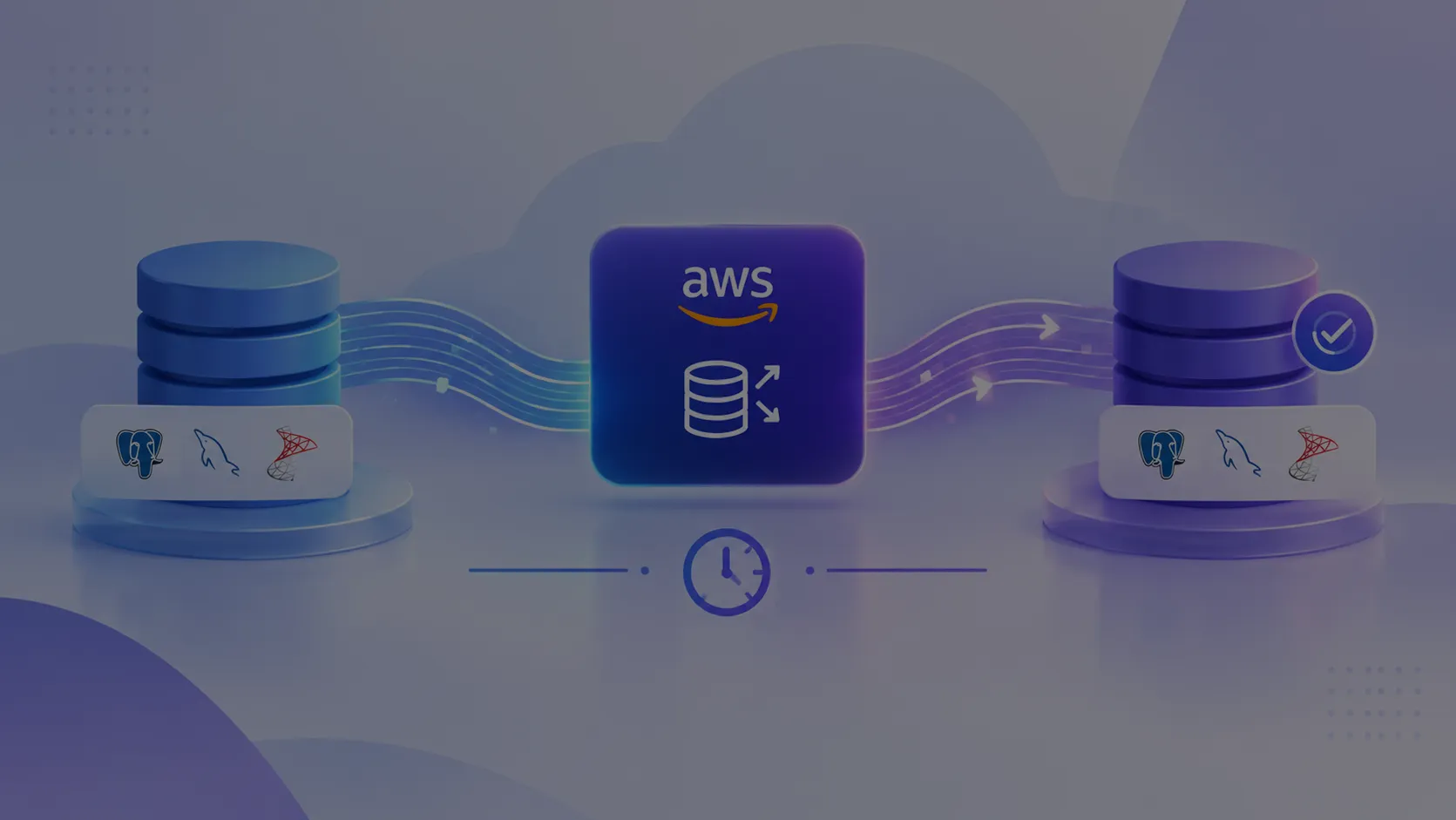
Migrating Databases with AWS DMS With Nearly Zero Downtime
Learn how to migrate databases using AWS DMS with nearly zero downtime using Full Load, CDC, validation, monitoring, and controlled cutover.
Read More
How to Add LiveKit Video Calling to a Next.js App
Add embedded video & audio calling to Next.js with LiveKit Cloud. Compared vs Twilio, Daily, Agora, Zoom — plus token auth, guests & recording.
Read More