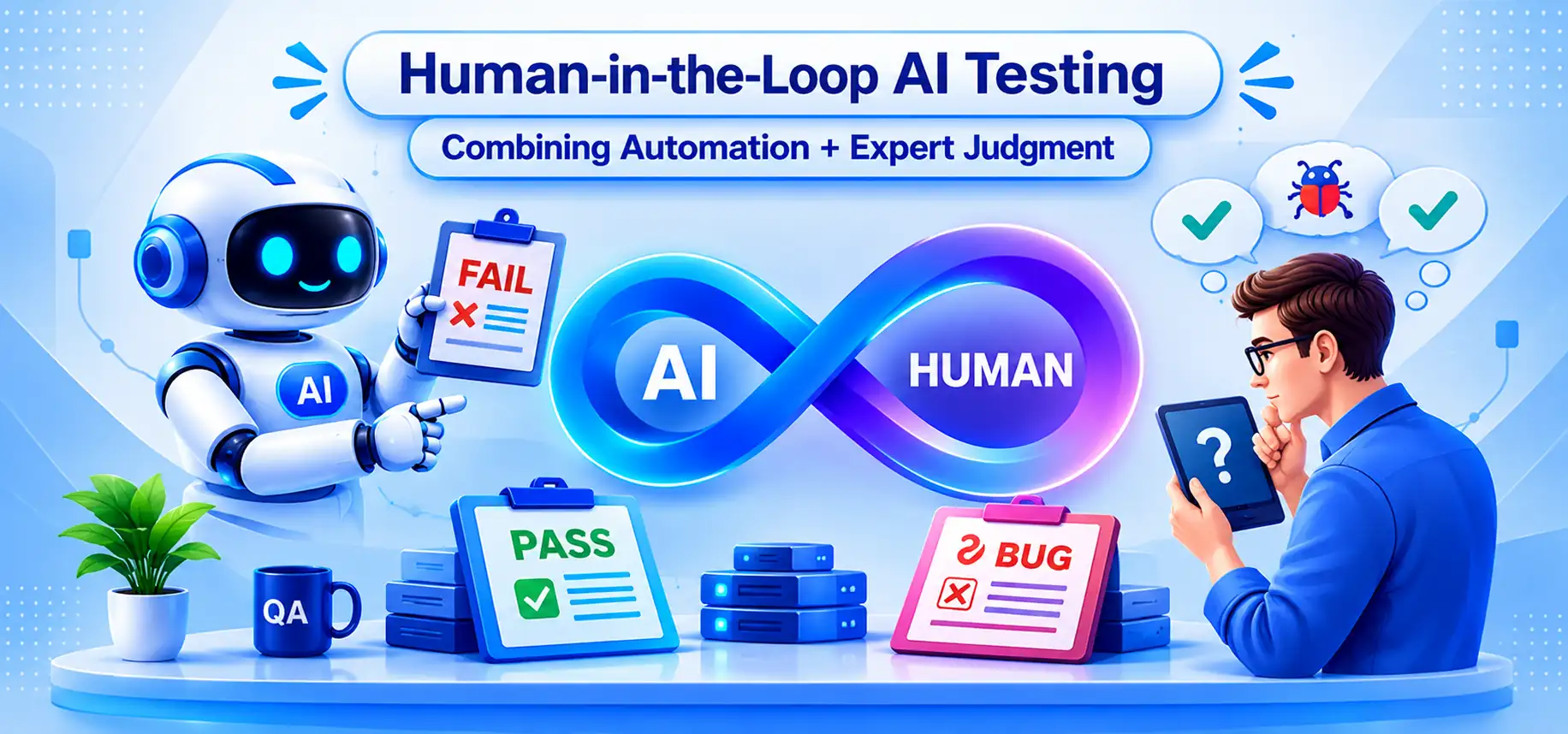
When AI Tests the Software, Who Owns the Quality?

Got a project?
Let's discuss your project
Imagine this
A team is preparing to release a new feature.
The developer says, “The code is ready.”
AI can execute tests quickly, its performance depends on the tools and environment. It checks the UI, validates API responses, compares expected and actual results, identifies a few edge cases, and reports:
"All critical tests passed."
The dashboard is green.
The team moves forward with the release.
A few hours later, a customer reports a serious issue.
The feature works exactly as the requirements describe, but the workflow doesn’t make sense for the way customers actually use the product.
Now comes the uncomfortable question:
If AI tested the software, who owns the quality?
Was it the AI?
The developer?
The QA engineer who configured the AI?
The product manager who defined the requirement?
Or the entire team?
This is not a futuristic question anymore. As AI becomes increasingly capable of generating test cases, executing tests, analyzing logs, identifying anomalies, and even deciding which scenarios to explore, the role of QA is changing.
But one thing should not change:
Quality cannot be delegated simply because testing can be automated.
AI Can Test But Can AI Own Quality?
AI is getting extremely good at executing tasks. It can generate thousands of test combinations. It can identify patterns humans may miss. It can run regression suites continuously. It can analyze logs and API responses. It can even suggest tests based on previous defects. But testing and quality ownership are not the same thing.
Testing asks:
"Does the software behave according to the conditions we gave it?"
Quality asks a much bigger question:
"Are we building the right thing, and does it actually work for the people who will use it?"
That difference is important. AI can verify that an API returns a 200 response. It may not recognize that the business process behind that response is wrong.
AI can execute the same regression suite thousands of times. It may still miss a scenario that nobody thought to test. This is where human quality ownership becomes critical.
What Happens When AI Says “All Tests Passed”?
This is where teams need to be careful. “Tests passed” does not automatically mean “the product is good.” It means the executed tests passed under the conditions in which they were run.
Imagine a requirement says:
"Users can create an order by entering customer details and selecting a delivery method."
AI can test:
- Valid customer details
- Invalid customer details
- Missing fields
- Different delivery methods
- API responses
- Database values
- Error messages
Everything passes. But a human QA engineer notices something else:
What happens if the user changes the customer details after selecting the delivery method? That scenario may not exist in the requirement. It may not exist in AI-generated tests. It may not fail technically. But it could create a serious business problem.
Test coverage measures how much of the planned functionality, requirements, or test scenarios have been tested, while quality coverage focuses on how thoroughly the software has been assessed for overall quality, usability, reliability, and potential risks. This is why test coverage is not the same as quality coverage. A well-defined software QA process helps teams close this gap.
AI Changes the Question QA Should Ask
Instead of asking:
"Did we test everything?"
QA professionals may increasingly need to ask: “What could still go wrong that we haven’t considered?” That is a very different mindset.
Let's Build Something Great Together
Ready to transform your idea into a powerful software solution? Talk to our experts and get a free consultation.
Contact Us
AI can help generate tests. QA can challenge the assumptions behind those tests. AI can analyze historical defects. QA can identify whether the testing strategy is still missing an important risk. AI can execute regression testing. QA can decide whether regression coverage actually represents the product’s critical workflows. AI can identify anomalies. QA can determine whether an anomaly is a real defect, an expected behavior, or a symptom of a deeper problem.
The QA engineer’s value moves from “I executed the tests” toward “I can identify potential risks and challenge whether the product is truly ready for release.”
The future of QA isn’t necessarily humans versus AI. It is humans using AI to become better at quality engineering.
So, Who Owns Quality?
The answer should not be:
"QA owns quality."
And it should not become:
"AI owns quality."
Quality is a shared responsibility, and every team member contributes to it throughout the software development lifecycle. Although different roles have specific responsibilities, quality cannot be achieved in isolation. Product teams, developers, QA professionals, and AI tools can all contribute to identifying issues, reducing risks, and improving the final product.
Product Owns the “What”, But Not Alone
Product teams define the problem the software needs to solve, establish business goals, and clarify user expectations. However, developers and QA can also contribute during requirement discussions by identifying ambiguities, challenging assumptions, and highlighting potential risks before development begins.
Developers Own the “How”, And Contribute to the “What”
Developers are responsible for building reliable, maintainable software and preventing defects through good engineering practices. They also help identify technical limitations, question unclear requirements, and highlight business or operational risks that may affect the solution.
QA Challenges “Does This Really Work?”, From the Beginning
QA brings a critical and investigative perspective to the process. QA professionals validate expected behaviour, explore unexpected scenarios, challenge assumptions, and identify risks that predefined requirements or test cases may overlook.
AI Becomes a Multiplier for the Entire Team
AI can support product teams in analysing requirements, help developers identify potential defects, and assist QA in generating test scenarios, exploring application behaviour, and identifying usability issues. However, AI-generated findings still require appropriate review and validation. AI enhances the team’s capabilities, but it does not replace human judgement, business understanding, or accountability.
Ultimately, these responsibilities overlap because quality is not achieved by one role working independently. Product helps define value, developers build the solution, QA investigates risks and validates behaviour, and AI can support each of these activities.
The Biggest Risk May Not Be AI
Ironically, the biggest risk may be how humans use AI.
If a team starts thinking:
"AI tested it, so we’re safe."
Then AI becomes dangerous, not because the technology is bad, but because the team has stopped thinking critically.
AI can create an illusion of confidence. A test report with thousands of passed tests looks impressive. But the important question is: Were the right things tested? One meaningful scenario can sometimes be more valuable than a thousand automated checks.
For example: Booking Management System. An AI testing agent performs the following actions:
- Creates a booking.
- Assigns a service provider.
- Verifies the booking confirmation.
- Check the API response.
- Validates the booking status.
All test cases pass. However, during exploratory testing, a human QA engineer notices that a supervisor can view confidential bookings belonging to another supervisor without the required permission.
The AI did not identify this issue because the access-control scenario was not included in its testing objectives. This example shows that even when all AI-generated tests pass, important business risks may still exist.
The QA Engineer of the AI Era
The QA engineer of the future may spend less time manually executing repetitive tests and more time doing things such as:
- Risk analysis
- Exploratory testing
- Test strategy
- Business-flow validation
- AI-generated test review
- Requirement analysis
- Failure investigation
- Automation strategy
- Data validation
- Production monitoring
- Quality metrics
- Challenging assumptions
This doesn’t reduce the importance of QA. It raises the level of the conversation. The QA engineer is no longer simply asking: “Does it work?” They are asking: “Should it work this way?”, “What happens if it doesn’t?”, “Who is affected?”, “What risks are we accepting?”, And perhaps most importantly: “What haven’t we thought about?”
The Final Question
AI may eventually become extremely good at testing software. It may generate better test cases than humans, execute tests faster than humans, find defects humans would never notice but when a customer is affected by a defect, the customer isn’t going to ask: “Which AI model tested this?”
They will ask: “Why did you release software that didn’t work?” That is why quality ownership cannot simply be handed over to AI. AI can execute the tests, find the patterns, accelerate the process but humans still need to own the decision to trust the software. The future of QA is therefore not about proving that humans can test better than AI, it is about learning how to combine AI’s scale with human judgment. Because ultimately:
AI can test the software, but the team still owns the quality.

From ETL to ELT: The Evolution of Data Pipelines in Modern Analytics
How and why data pipeline architecture evolved from ETL to ELT.
Read More
Bridge View Hybrid: A Smarter Path to Bringing Web Apps to Mobile
Learn how the Bridge View Hybrid architecture uses a React Native shell and WebView to launch iOS and Android apps faster, cheaper, and with less risk.
Read More
10 AI Prompts Every Manual Tester Should Have in Their QA Toolkit
Discover 10 practical AI prompts manual testers can use to improve test coverage, find edge cases, analyze bugs, strengthen regression testing, and become more effective QA engineers.
Read More
The Website Accessibility Revolution: Why You Can't Afford to Ignore WCAG 2.2
Website accessibility starts with WCAG 2.2. Learn how accessible design, development, QA, and testing can help create websites that work for everyone.
Read More
Race Conditions in Web Applications: Why Correct Code Produces Wrong Results
Race conditions silently corrupt data when concurrent requests touch shared state at the wrong time. Learn how atomic updates, transactions, idempotency, and locking keep your application correct under real concurrency.
Read More
AI Writes the Code • Stop Blindly Shipping It Without Reviewing the Engineering
A practical perspective on AI-generated code, scalability, maintainability, and engineering judgment and why engineering review still owns the final decision.
Read More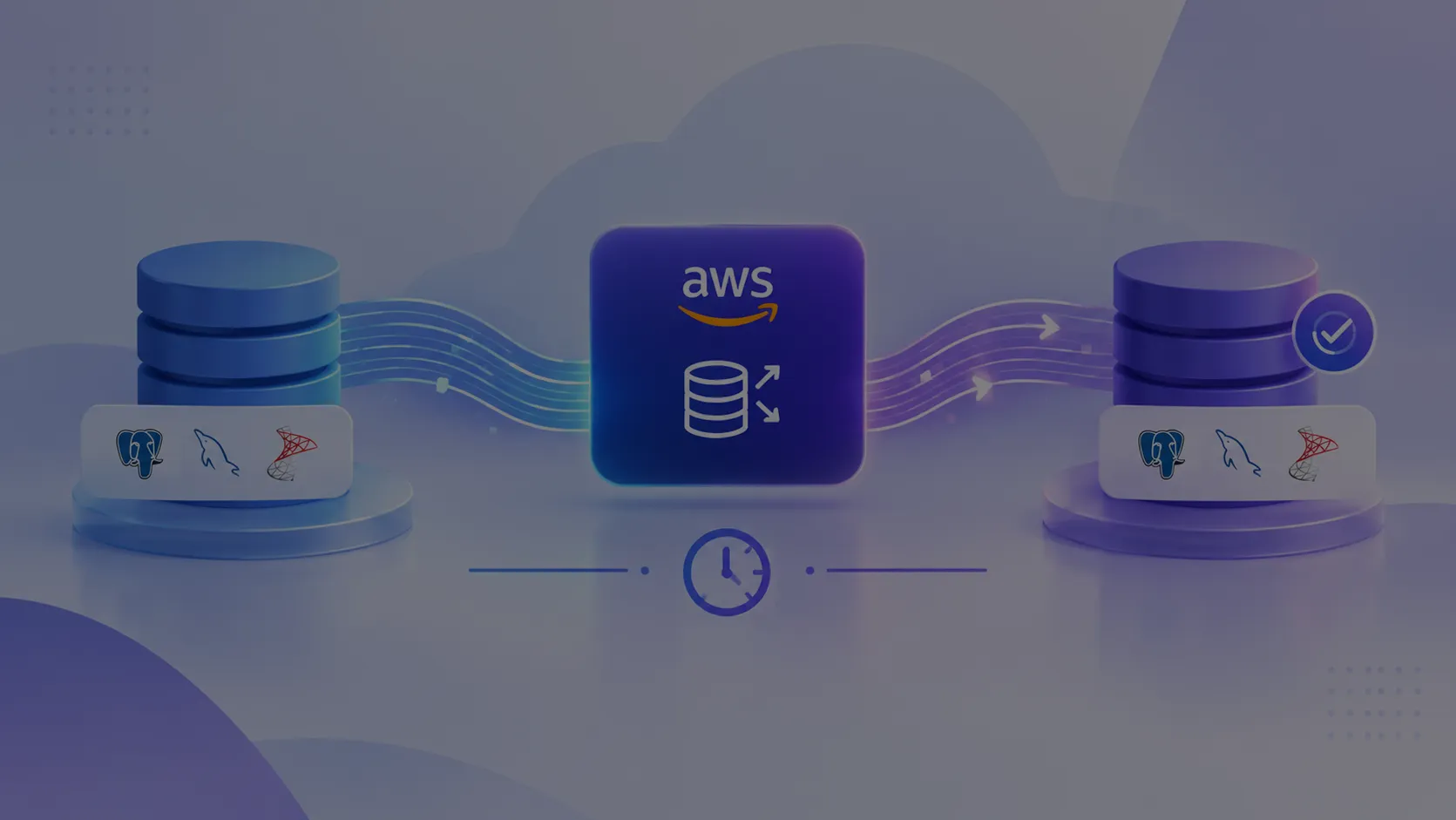
Migrating Databases with AWS DMS With Nearly Zero Downtime
Learn how to migrate databases using AWS DMS with nearly zero downtime using Full Load, CDC, validation, monitoring, and controlled cutover.
Read More
How to Add LiveKit Video Calling to a Next.js App
Add embedded video & audio calling to Next.js with LiveKit Cloud. Compared vs Twilio, Daily, Agora, Zoom — plus token auth, guests & recording.
Read More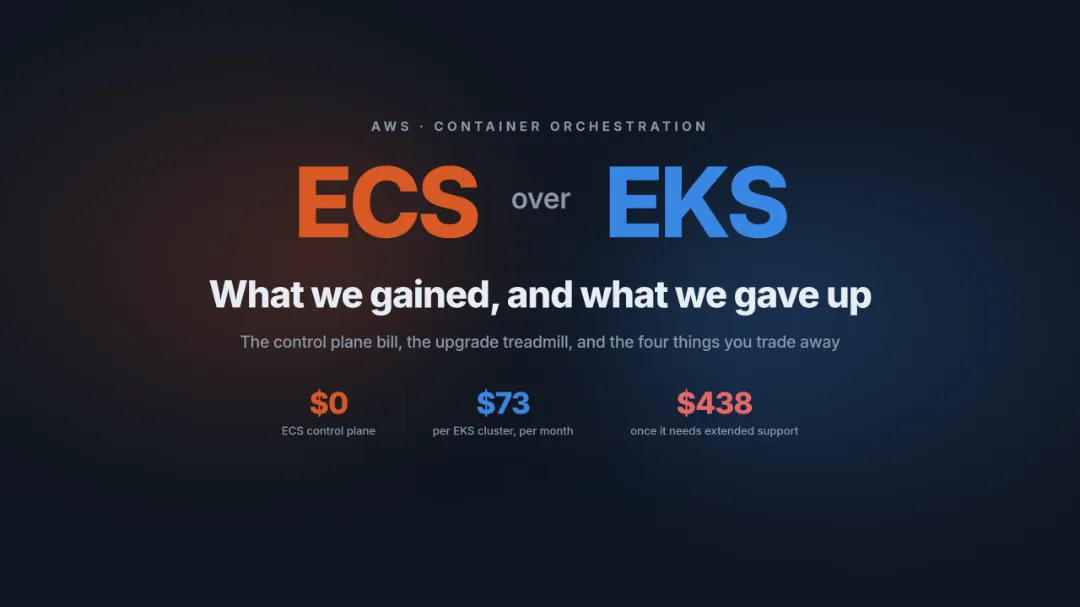
We chose ECS over EKS: what we gained and what we gave up
An honest comparison of ECS vs EKS the costs, tradeoffs, and real-world reasoning behind choosing ECS for a production platform on AWS.
Read More