
QA Engineers Beyond The Tradition

Got a project?
Let's discuss your project
Introduction
A few weeks ago, I wrote a piece of advice on linkedIn encouraging developers and designers to pick up new technologies during the year a strategy essential for keeping careers vibrant and opportunities within reach.
However, when it came to brainstorming growth ideas for QA engineers, I found myself stuck. Despite all my thinking, the only obvious transformation I could recall was moving into Project Management.
But that cannot be the only path, right?
The reality is: not every QA engineer should or can become a project manager. People’s talents, passions, and circumstances differ. We need multiple career tracks, not a single escape route.
So, I sat down with experienced QA professionals, discussed their journeys, and examined what realistic, practical growth options exist for QA engineers today.
Here’s what I found and what every QA professional should know to future-proof their career.
The Career Trap Many QA Engineers Face
Unlike developers, who are pushed to learn new tech stacks as companies expand their technical muscles, QA engineers often find themselves trapped in repetition. Service companies need to grow technical capabilities to meet client demands, so developers are encouraged and supported when they take on new learning challenges. Every new tech stack they master strengthens their resume and makes them more valuable.
Organizations are hesitant to invest heavily in automation for short-term projects because requirements change fast.
Imagine spending months building detailed automated tests only to have the UI redesign throw everything into the trash. The clients of service based companies are startups which usually don’t have a very clear path, so it is seen that requirements change drastically after every iteration.
Because of this instability, QA engineers are often asked to focus on manual testing, year after year.
But here’s the harsh truth: doing manual testing for six years does not mean you have six years of “career growth” on your resume. Instead, it looks like one or two years of experience, repeated multiple times.
If you want real career progression, you need to break out of this loop deliberately.
Beyond Testing: Unlocking Career Growth for QA Engineers
The Power of Product-Based Companies
If you are serious about building a long-term career as a QA engineer, joining a product-based company could be a game-changer.
Unlike service companies, where projects shift frequently, product companies offer a stable environment focused on long-term value creation. Here’s why they are ideal:
- You get time to understand deep business logic instead of testing random modules.
- Over time, you can become the go-to technical resource the one developers, product managers, and even clients rely on to understand how the system truly works.
- You’ll have the opportunity to grow into a knowledge engineer someone who preserves and expands domain expertise inside the company.
- Product-based setups allow meaningful investments in test automation, framework generation, load testing, and parallel testing without fearing constant resets.
Particularly in industries like Finance, Healthcare, or Insurance, product companies are eager for QA professionals who can think strategically, innovate in testing approaches, and help the business scale securely and efficiently.
In short: If you want your QA career to flourish, seek out a home where stability and growth go hand in hand.
Emerging Career Paths for QA Engineers
Now, let’s walk through the main growth paths available today, moving slightly beyond the traditional manual QA track.
1. Transition Into a Data Analyst Role
Today, everything from AI models to strategic decisions revolves around data. QA engineers, with their sharp attention to detail and domain understanding, are in a perfect position to evolve into data-focused roles.
Instead of relying on developer-generated reports, learn to query databases, validate data quality, and analyze discrepancies at the source.
Building strength in SQL, data visualization, and even basic statistics will future-proof your profile.
I predict a new field is emerging: Data Testers professionals focused on ensuring that AI models and analytics pipelines are trained on clean, credible, verified data.
Mastering this will not only boost your testing skills but can launch you into the high-demand world of Data Science and AI assurance. If you’re interested in expanding your skill set, you could invest time in learning tools like Power BI, tableau for data visualization and reporting a valuable addition for QA professionals moving toward data-driven roles.
2. Become an SDET (Software Development Engineer in Test)
The role of an SDET is more technical but incredibly rewarding.
An SDET doesn’t just automate existing manual tests; they develop tools, frameworks, and systems that empower entire QA teams to work faster and more accurately.
Imagine building a “testing Shopify” a platform where new projects can plug and play basic login tests, registration flows, API validations, and sorting/filtering verifications without starting from scratch every time.
In many companies today, particularly in regions like Karachi, developers are expected to test their own work. However, there is a gap: automated testing expertise.
Let's Build Something Great Together
Ready to transform your idea into a powerful software solution? Talk to our experts and get a free consultation.
Contact Us
SDETs can fill this gap, bridging development and quality assurance, creating a system where quality is integrated from the first line of code.
Skills to build: programming (Python, JavaScript, Java), test architecture, and CI/CD pipeline integration.
3. Advance in Test Automation
Test automation has existed for a long time, but today’s tools offer far more powerful and intelligent options than Selenium alone.
Modern frameworks to explore:
- Playwright (highly capable browser automation tool)
- Checkly (synthetic monitoring built on Playwright)
- Cypress (easy setup for end-to-end tests)
- QA Wolf (AI-assisted test generation)
- Reflect.run (smart recording-based testing)
You can now even write Playwright scripts with the help of ChatGPT or GitHub Copilot.
The future of automation? Building AI agents that explore and test systems without predefined scripts a huge leap from the current “record and playback” tools. However, the future of test automation seems even more exciting: AI-powered agents could one day “explore and find bugs on their own. Custom-built agents using AI models (like GPT-based systems) could take testing to the next level. Imagine simply inputting a goal like, “Log in to the website and book a ticket,” and having an AI agent autonomously perform the tests, detecting bugs, and ensuring the system is robust.
4. Step into Cybersecurity Testing
Security is no longer an afterthought it’s a foundation.
QA engineers can expand their skillsets by moving into security testing fields:
- Conduct input validation and access control tests.
- Verify applications against industry standards like OWASP Top 10.
- Integrate automated security scans into CI/CD pipelines.
- Collaborate with DevOps and security teams to promote a security-first culture.
Related areas to master:
- Penetration Testing (Pen Testing): Simulate attacks to find vulnerabilities before hackers do.
- Compliance Testing: Verify GDPR, HIPAA, CCPA, and Intellectual Property handling.
- Privacy Assurance: Ensure proper data protection and legal compliance.
As cyber threats grow, QA engineers with security expertise will be indispensable.
5. Evolve Into Product or Project Management
QA engineers already work closely with timelines, requirements, risks, and cross-functional teams all vital project management skills.
To transition into management roles:
- Start participating in sprint planning, risk assessments, and retrospectives not just as a tester but as a project contributor.
- Learn Agile and Waterfall methodologies formally.
Get certifications like:
- Certified Scrum Master (CSM)
- Project Management Professional (PMP)
Become fluent in project tools:
- Jira, Trello, Asana for task management
- Confluence, Notion for knowledge documentation
- MS Project for high-level planning
Gradually, you will move from validating deliverables to coordinating their creation a natural, organic evolution of your skills.
In Conclusion
The world for QA engineers is no longer limited to endless manual cycles. Opportunities abound but they require conscious effort, learning, and a strategic shift.
Whether your heart leans toward automation, data analytics, security, or project leadership, one principle stands above all:
You must own your career growth.
Invest in yourself.
Find companies that invest in your learning, not just your labor.
Push your skills toward the future, not the past.
Because in the rapidly changing landscape of technology, standing still is the fastest way to fall behind.

From ETL to ELT: The Evolution of Data Pipelines in Modern Analytics
How and why data pipeline architecture evolved from ETL to ELT.
Read More
Bridge View Hybrid: A Smarter Path to Bringing Web Apps to Mobile
Learn how the Bridge View Hybrid architecture uses a React Native shell and WebView to launch iOS and Android apps faster, cheaper, and with less risk.
Read More
10 AI Prompts Every Manual Tester Should Have in Their QA Toolkit
Discover 10 practical AI prompts manual testers can use to improve test coverage, find edge cases, analyze bugs, strengthen regression testing, and become more effective QA engineers.
Read More
The Website Accessibility Revolution: Why You Can't Afford to Ignore WCAG 2.2
Website accessibility starts with WCAG 2.2. Learn how accessible design, development, QA, and testing can help create websites that work for everyone.
Read More
Race Conditions in Web Applications: Why Correct Code Produces Wrong Results
Race conditions silently corrupt data when concurrent requests touch shared state at the wrong time. Learn how atomic updates, transactions, idempotency, and locking keep your application correct under real concurrency.
Read More
AI Writes the Code • Stop Blindly Shipping It Without Reviewing the Engineering
A practical perspective on AI-generated code, scalability, maintainability, and engineering judgment and why engineering review still owns the final decision.
Read More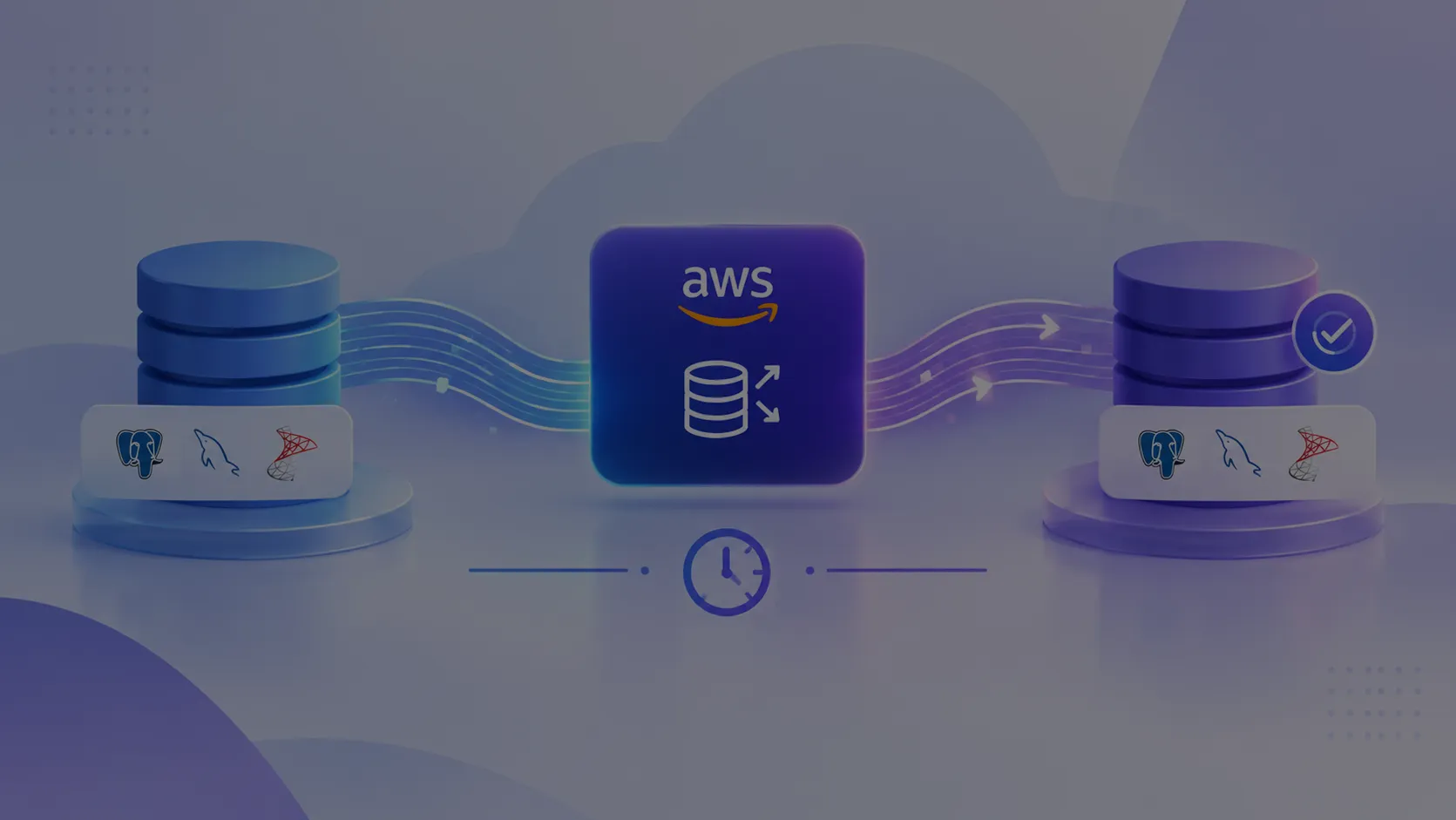
Migrating Databases with AWS DMS With Nearly Zero Downtime
Learn how to migrate databases using AWS DMS with nearly zero downtime using Full Load, CDC, validation, monitoring, and controlled cutover.
Read More
How to Add LiveKit Video Calling to a Next.js App
Add embedded video & audio calling to Next.js with LiveKit Cloud. Compared vs Twilio, Daily, Agora, Zoom — plus token auth, guests & recording.
Read More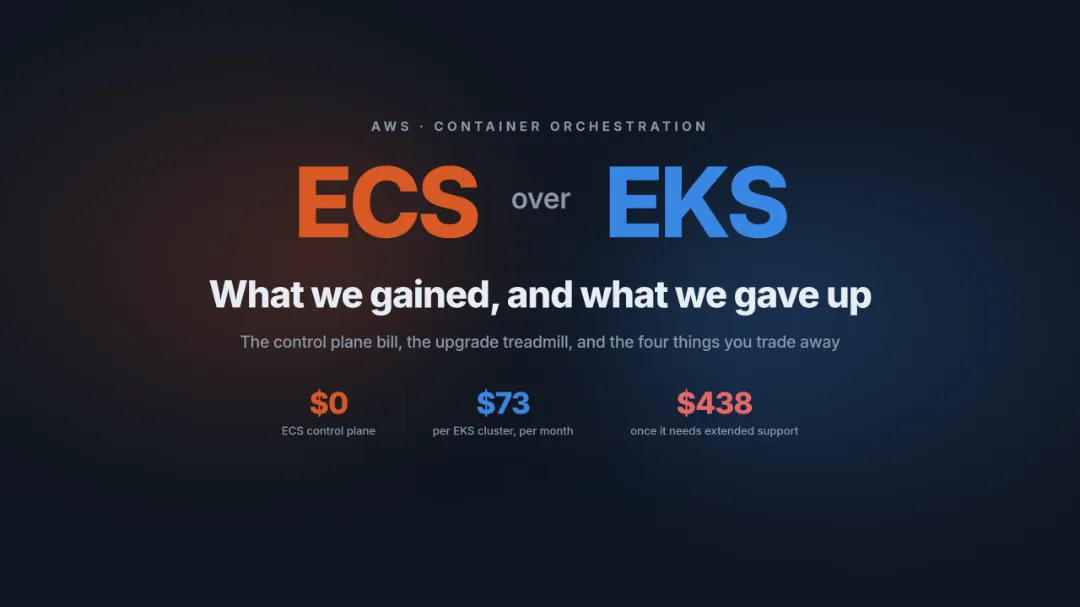
We chose ECS over EKS: what we gained and what we gave up
An honest comparison of ECS vs EKS the costs, tradeoffs, and real-world reasoning behind choosing ECS for a production platform on AWS.
Read More