
EKS vs. ECS Fargate: What’s Better for Your Containerized Application?

Got a project?
Let's discuss your project
Introduction
As organizations migrate workloads to the cloud, DevOps & cloud infrastructureization has become the standard for building portable, consistent applications. Running containers at scale, however, requires an orchestration layer to manage scheduling, scaling, and networking.
On AWS, this choice typically comes down to two distinct approaches: Amazon ECS Fargate and Amazon EKS. The question is no longer whether to use containers, but how to orchestrate them effectively.
Choosing the wrong platform can create long-term technical debt, increase operational overhead, and complicate future migrations. This comparison evaluates both services across architecture, operational model, and use cases to help you select the most suitable foundation for your application.
1. Amazon ECS Fargate: The Managed Serverless Path
Amazon ECS (Elastic Container Service) is AWS’s native container orchestration platform. When combined with Fargate, the compute layer becomes fully serverless, eliminating the need to manage or provision virtual machines. Teams define their container requirements, and AWS handles capacity, scaling, and infrastructure management.
This model allows engineers to focus entirely on application logic and deployment workflows rather than cluster operations. ECS Fargate is intentionally opinionated and optimized for simplicity, security, and low operational overhead.
Why it wins:
Low Cognitive Load:
You don’t need to learn Kubernetes concepts. If you understand Docker, ECS is easy to pick up and use quickly.
No Control Plane to Manage:
AWS handles the availability and scaling of the orchestration layer. There are no master nodes to maintain, scale, or secure.
Serverless Security:
Each task runs in an isolated environment. There are no EC2 instances to patch, harden, or monitor.
2. Amazon EKS: The Enterprise Orchestration Standard
Amazon Elastic Kubernetes Service (EKS) is AWS’s managed Kubernetes offering. It provides a fully managed Kubernetes control plane that is automatically patched, scaled, and deployed across multiple Availability Zones.
Kubernetes has become the industry standard for container orchestration due to its flexibility, extensibility, and massive ecosystem. EKS allows organizations to run upstream-compatible Kubernetes on AWS without operating the control plane themselves.
Let's Build Something Great Together
Ready to transform your idea into a powerful software solution? Talk to our experts and get a free consultation.
Contact Us
This makes EKS a strong choice for enterprises that need portability, advanced orchestration features, and deep customization across networking, security, and deployment workflows.
Why it wins:
The Ecosystem:
If you need service meshes (Istio), advanced observability (Prometheus/Grafana), or GitOps pipelines (ArgoCD), Kubernetes is the natural platform.
No Vendor Lock-in:
EKS is fully upstream Kubernetes. Your manifests can run on any Kubernetes cluster in any cloud or on-prem environment.
Granular Control:
You control networking, storage, scheduling, autoscaling, and security policies at a fine-grained level.
Decision Criteria: Selecting the Right Service
Choosing between ECS Fargate and EKS depends on your teams expertise, your application’s complexity, and your long-term infrastructure goals or strategy.
Choose ECS Fargate if…
Operational bandwidth is limited:
Ideal for small-to-medium DevOps teams that want to prioritize application development over infrastructure operations. It removes the need for dedicated engineers to manage cluster upgrades, patching, or server scaling.
Velocity is a priority:
If your goal is to deploy microservices quickly, ECS Fargate lets you move from a Dockerfile to a live service with minimal configuration. Integration with AWS-native tools like CloudWatch and App Mesh is straightforward.
Workloads follow standard patterns:
Best suited for monolithic or microservice applications such as web APIs, background workers, or scheduled jobs that do not require custom networking or kernel-level customization.
Choose Amazon EKS if…
Kubernetes proficiency already exists:
If your team is already comfortable with Kubernetes objects (Pods, Services, Ingress), EKS allows you to use that expertise without managing the Kubernetes control plane.
Portability and multi-cloud strategies are required:
EKS is well-suited for organizations that need a consistent deployment model across multiple clouds or on-prem environments, helping reduce vendor lock-in.
Requirements involve complex orchestration:
EKS is the right choice for applications that require advanced capabilities such as service meshes (Istio or Linkerd) for mTLS, custom autoscaling based on specialized metrics, or Kubernetes Operators for managing stateful systems like databases.
Conclusion: Strategic Selection for Long-Term Scalability
The choice between ECS Fargate and EKS should be guided by your team’s expertise, operational priorities, and application complexity. There is no one-size-fits-all solution-only the platform that aligns with your technical and business needs.
For teams prioritizing speed, simplicity, and minimal infrastructure management, ECS Fargate delivers a serverless, low-maintenance container experience. For organizations requiring flexibility, advanced orchestration, and broad ecosystem support, EKS provides the control needed to manage large-scale, distributed systems.
Ultimately, container orchestration is about balancing operational complexity with architectural freedom. Choosing the right platform early ensures a foundation that supports both immediate deployment and long-term growth.

Bridge View Hybrid: A Smarter Path to Bringing Web Apps to Mobile
Learn how the Bridge View Hybrid architecture uses a React Native shell and WebView to launch iOS and Android apps faster, cheaper, and with less risk.
Read More
10 AI Prompts Every Manual Tester Should Have in Their QA Toolkit
Discover 10 practical AI prompts manual testers can use to improve test coverage, find edge cases, analyze bugs, strengthen regression testing, and become more effective QA engineers.
Read More
The Website Accessibility Revolution: Why You Can't Afford to Ignore WCAG 2.2
Website accessibility starts with WCAG 2.2. Learn how accessible design, development, QA, and testing can help create websites that work for everyone.
Read More
Race Conditions in Web Applications: Why Correct Code Produces Wrong Results
Race conditions silently corrupt data when concurrent requests touch shared state at the wrong time. Learn how atomic updates, transactions, idempotency, and locking keep your application correct under real concurrency.
Read More
AI Writes the Code • Stop Blindly Shipping It Without Reviewing the Engineering
A practical perspective on AI-generated code, scalability, maintainability, and engineering judgment and why engineering review still owns the final decision.
Read More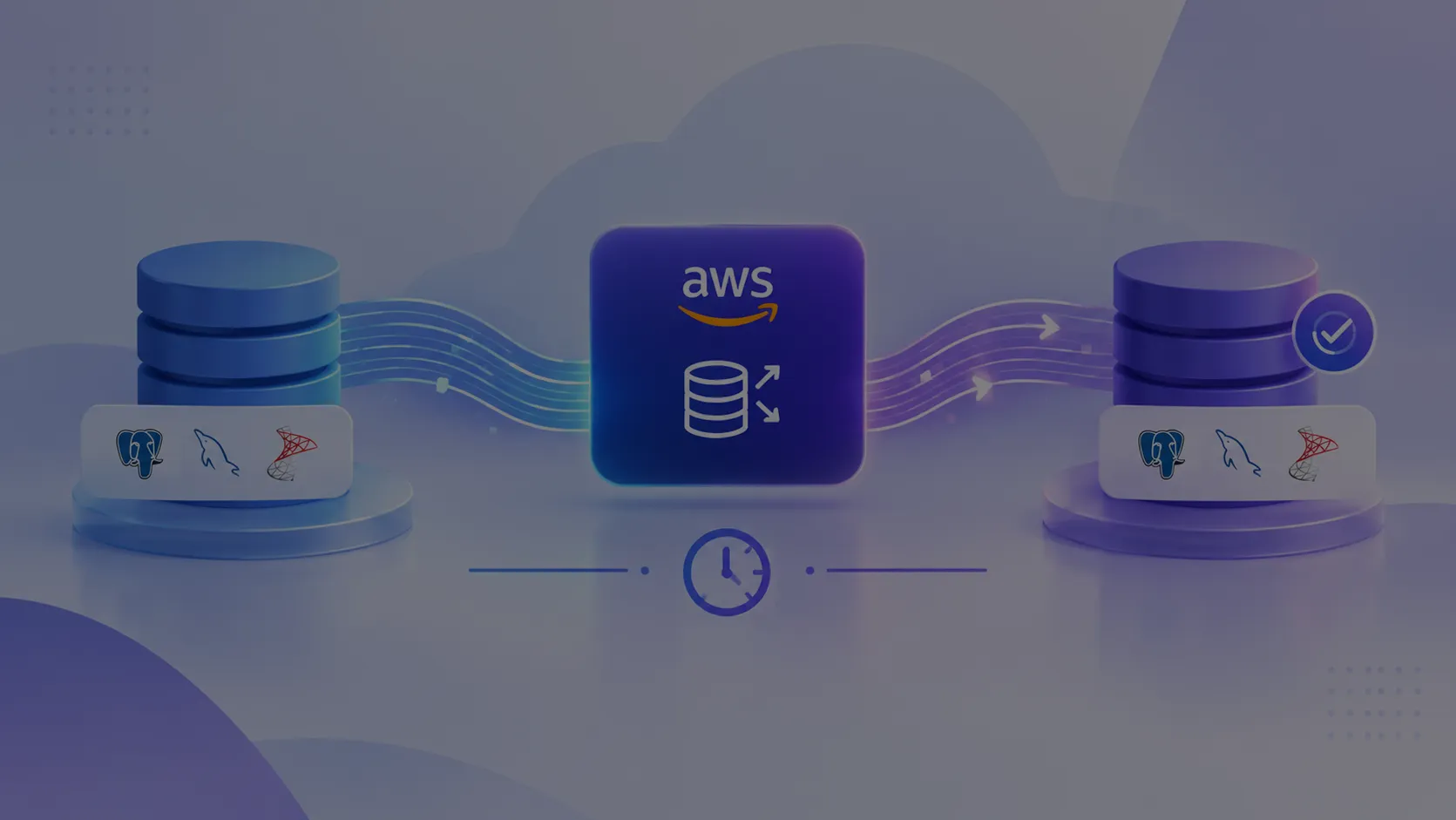
Migrating Databases with AWS DMS With Nearly Zero Downtime
Learn how to migrate databases using AWS DMS with nearly zero downtime using Full Load, CDC, validation, monitoring, and controlled cutover.
Read More
How to Add LiveKit Video Calling to a Next.js App
Add embedded video & audio calling to Next.js with LiveKit Cloud. Compared vs Twilio, Daily, Agora, Zoom — plus token auth, guests & recording.
Read More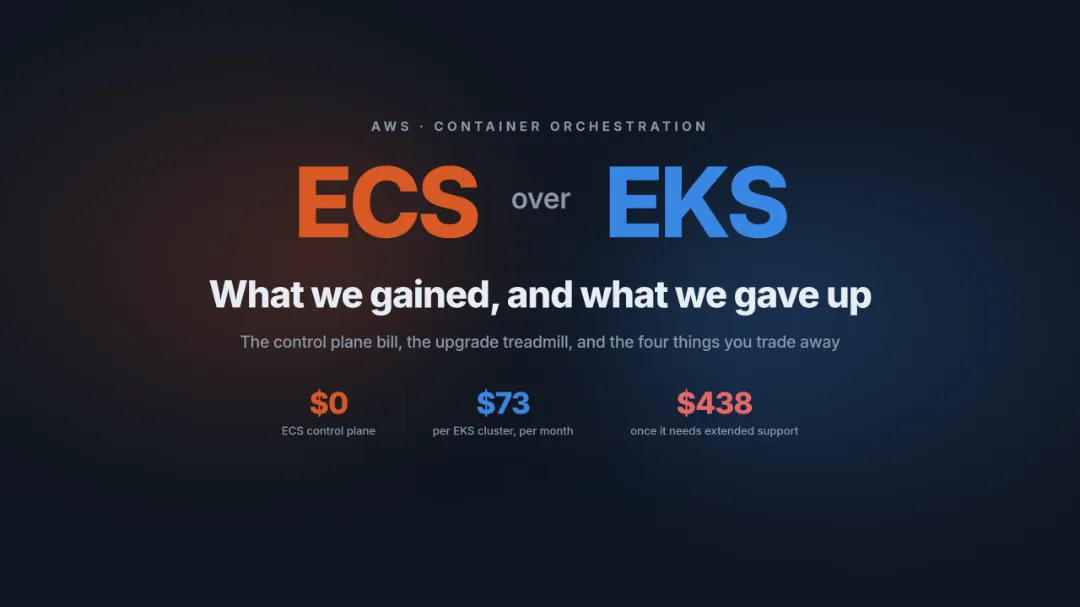
We chose ECS over EKS: what we gained and what we gave up
An honest comparison of ECS vs EKS the costs, tradeoffs, and real-world reasoning behind choosing ECS for a production platform on AWS.
Read More
Upgrading Legacy Systems: From Outdated Technology to Competitive Advantage
Learn how to upgrade legacy systems through application modernization, API integration, cloud migration, security improvements, and incremental system upgrades without disrupting business operations.
Read More