
What is a Data Lake, Data Warehouse, and Data Lakehouse? - A Simple Beginner’s Guide

Got a project?
Let's discuss your project
Introduction
Data has become one of the most valuable assets for modern businesses. Every click, transaction, message, and app interaction generates information that companies want to store, analyze, and learn from. To handle this growing volume of data, organizations rely on different data architectures designed for specific purposes.
Data Warehouses, Data Lakes, and Data Lakehouses are widely used across modern cloud platforms such as AWS, Microsoft Azure, and Google Cloud, and understanding how they differ is becoming essential for today’s software teams, product managers, and tech leaders. This guide explains these concepts in simple language, using real-world analogies and practical examples, so you can confidently understand when and why to use each one.
What is a Data Warehouse?
Think of a Data Warehouse as a Library
A data warehouse is like a carefully organized library.
- Only well-structured, categorized books are stored.
- Everything follows a clear system before being placed on the shelves.
- Finding information is fast because everything is already organized.
In Simple Terms
A data warehouse stores structured, cleaned, and processed data that is ready for reporting and business analysis.
Real-World Example
An e-commerce company uses a data warehouse to store order history, revenue reports, and customer purchase summaries. Business teams rely on it for dashboards, KPIs, and executive reports because queries are fast and predictable.
What is a Data Lake?
Think of a Data Lake as a Large Water Reservoir
A data lake is like a huge storage reservoir that collects water from many sources without filtering it first.
- Data is stored in its raw form.
- You decide later how to process or analyze it.
- Flexible, but can become messy if unmanaged.s
In Simple Terms
A data lake stores all types of data-structured, semi-structured, and unstructured-without forcing a predefined format.
Real-World Example
A food delivery app collects app logs, GPS data, customer reviews, images, and transaction data. All of this flows into a data lake so analysts and data scientists can later explore patterns or train machine learning models.
What is a Data Lakehouse?
Think of a Data Lakehouse as a Modern Kitchen
A data lakehouse is like a kitchen where you can store raw ingredients and also prepare finished meals in the same space.
Let's Build Something Great Together
Ready to transform your idea into a powerful software solution? Talk to our experts and get a free consultation.
Contact Us
- Raw data is stored like a data lake.
- Structured analytics work like a data warehouse.
- One system supports both exploration and reporting.
In Simple Terms
A data lakehouse combines the flexibility and scale of a data lake with the performance and structure of a data warehouse.
Real-World Example
A fintech company stores raw transaction logs and customer behavior data while also running real-time analytics and compliance reports from the same system-without maintaining separate platforms.
Data Lake vs Data Warehouse vs Data Lakehouse - Comparison Table
| Feature | Data Warehouse | Data Lake | Data Lakehouse |
|---|---|---|---|
| Purpose | Reporting & BI | Raw data storage & exploration | Unified analytics & ML |
| Data Types | Structured only | All data types | All data types |
| Schema | Schema on write | Schema on read | Flexible with optimization |
| Cost | Higher | Lower | Medium |
| Performance | Very fast for analytics | Slower without processing | Fast and flexible |
| Typical Use Cases | Dashboards, KPIs | Data science, logs | Analytics + ML + BI |
When Should You Use Which?
Choose a Data Warehouse if:
- You need reliable business reports and dashboards
- Data structure is well-defined
- Query performance is critical
Choose a Data Lake if:
- You want to store large volumes of raw data
- You support data science or experimentation
- Data structure may change over time
Choose a Data Lakehouse if:
- You want one platform for analytics and ML
- You need flexibility without losing performance
- You want to reduce system complexity
Common Beginner Mistakes
- 1Assuming one solution fits all use cases
- 2Letting data lakes become “data swamps”
- 3Ignoring data quality and governance
- 4Overengineering too early
Choosing the right architecture depends on business goals, not just technology trends.
Summary & Key Takeaways
- Data Warehouses are best for structured analytics and reporting.
- Data Lakes excel at storing rwwaw, diverse data at scale.
- Data Lakehouses bridge the gap by combining flexibility and performance.
Understanding the differences helps teams design smarter, more cost-effective data systems.
Who This Guide Is For
This guide is especially useful for beginners, product managers, startup teams, and software engineers who want a clear, practical understanding of modern data architectures-without diving into heavy data engineering concepts.

AI Writes the Code • Stop Blindly Shipping It Without Reviewing the Engineering
A practical perspective on AI-generated code, scalability, maintainability, and engineering judgment and why engineering review still owns the final decision.
Read More
Migrating Databases with AWS DMS With Nearly Zero Downtime
Learn how to migrate databases using AWS DMS with nearly zero downtime using Full Load, CDC, validation, monitoring, and controlled cutover.
Read More
How to Add LiveKit Video Calling to a Next.js App
Add embedded video & audio calling to Next.js with LiveKit Cloud. Compared vs Twilio, Daily, Agora, Zoom — plus token auth, guests & recording.
Read More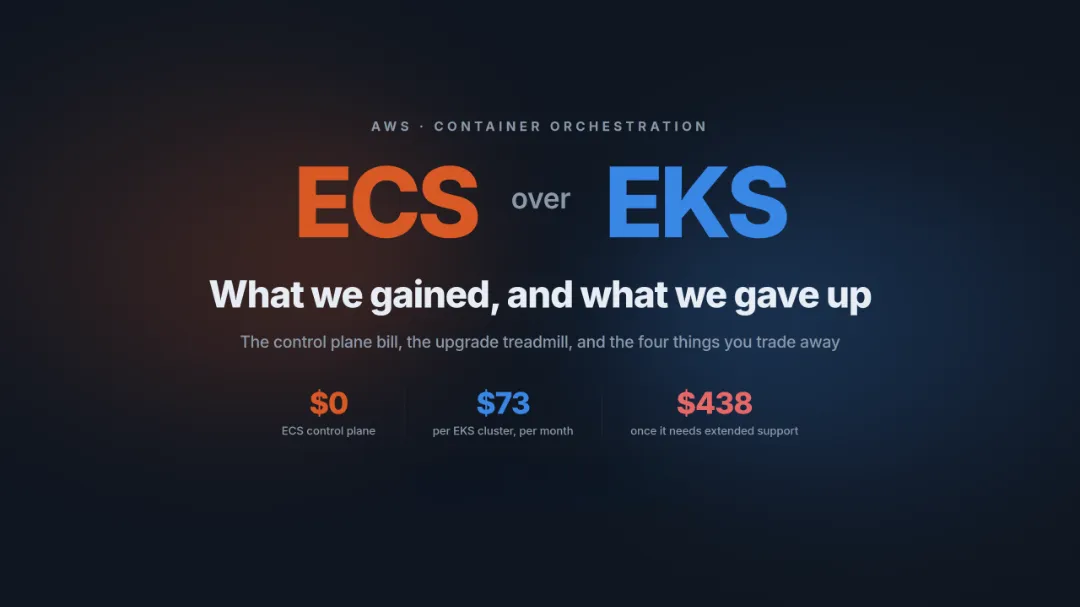
We chose ECS over EKS: what we gained and what we gave up
An honest comparison of ECS vs EKS the costs, tradeoffs, and real-world reasoning behind choosing ECS for a production platform on AWS.
Read More
Upgrading Legacy Systems: From Outdated Technology to Competitive Advantage
Learn how to upgrade legacy systems through application modernization, API integration, cloud migration, security improvements, and incremental system upgrades without disrupting business operations.
Read More
Building Distributed Tracing and Observability with AWS X-Ray
A practical guide to correlating requests across a multi-tier application using correlation IDs, AWS X-Ray segments, and structured logging for faster incident debugging.
Read More
Designing Before and After AI: What Really Changed
A look at how AI has transformed UI/UX design from manual wireframes and slow research to AI-assisted prototyping, design-to-code, and personalization at scale.
Read More
Beyond Prompting: Managing Context and Tokens in AI Coding Tools
Ever wondered why your AI coding agent starts losing context or hits a hard limit mid-task? The answer lies in tokens and the context window. Good AI coding is not about giving the model the most information. It is about giving it the right information at the right time.
Read More
What Is llms.txt? How It Helps Google, AI Search, and Agentic Browsing Find Your Website
Learn what llms.txt is, how it differs from sitemap.xml and robots.txt, and how it can help your site get found by Google, AI search tools, and AI agents.
Read More