
Multi-Tenancy Patterns in DynamoDB: Silo, Pool, and Bridge Models

Introduction
If you've already made the jump from a relational database to DynamoDB see our guide on moving relational data from SQL to DynamoDB the next hard question shows up fast once you're building a SaaS product: how do you isolate data for multiple tenants inside a single-table, NoSQL design?
Multi-tenancy isn't a single decision. It's a spectrum. On one end, you give every tenant their own table maximum isolation, maximum cost and operational overhead. On the other end, every tenant shares one table and one set of capacity minimum cost, minimum isolation. Most production systems land somewhere in between.
This guide breaks down the three patterns you'll actually encounter in the field Silo, Pool, and Bridge with the trade-offs, key design implications, and a decision framework so you can pick confidently instead of guessing. If your architecture also leans on EventBridge for event-driven communication between services, the isolation pattern you choose here will directly shape how tenant context flows through your events.
Why Tenant Isolation Strategy Matters
In a relational database, multi-tenancy is usually solved with a tenant_id column and row-level security, or with separate schemas or databases per tenant. DynamoDB doesn't give you row-level security or foreign keys, so tenant isolation has to be designed into your key schema and access patterns from day one a natural extension of the trade-offs we cover in Pros and Cons of Using DynamoDB.
Getting this wrong early is expensive to fix later migrating tenant data between isolation models after launch means touching every access pattern in the application, not just a config value.
Understanding Where Your Tenants Sit on the Isolation Spectrum
Before choosing a pattern, we look at three factors that decide which model actually fits the application:
- Tenant count and size a handful of large enterprise tenants behave very differently from tens of thousands of small tenants.
- Compliance requirements data residency, encryption-at-rest boundaries, or contractual isolation clauses (the same lens we use when building secure multi-account AWS architectures for enterprise environments).
- Traffic shape are a few tenants generating most of the read/write volume (noisy neighbors), or is load evenly distributed across all of them?
These three questions shape every decision that follows, which is why we work through them with the client before touching the table design.
Pattern 1: The Silo Model
In the Silo model, each tenant gets a fully dedicated DynamoDB table, and in stricter setups, a dedicated AWS account or VPC boundary entirely. There is no shared infrastructure at the data layer.
Pros
- Strongest possible data isolation no risk of cross-tenant data leakage from a query bug.
- Simplifies compliance audits you can point to a specific table or account per customer.
- Per-tenant capacity planning and cost attribution is trivial.
- Blast radius of an incident is contained to one tenant.
Cons
- Operational overhead scales linearly with tenant count provisioning, monitoring, and backups multiply.
- DynamoDB's default table-count limits per region become a real constraint at scale.
- Schema changes must be rolled out across every table individually.
Silo is the right call for a small number of high-value, high-sensitivity tenants enterprise or government customers with strict data residency requirements not for a high-volume, self-serve SaaS product.
Pattern 2: The Pool Model
The Pool model puts every tenant in the same table and separates their data using key design alone. The most common approach is prefixing the partition key with the tenant ID:
"PK: TENANT#<tenant_id>#USER#<user_id> "
"SK: ORDER#<order_id>"
Every query includes the tenant ID as part of the key condition, which means a query can never accidentally cross tenant boundaries as long as the application code always supplies it correctly which is also this pattern's biggest risk.
Pros
- Lowest operational overhead one table, one schema, one set of monitoring dashboards.
- Cost-efficient capacity is shared and absorbs uneven tenant traffic more gracefully than fragmented tables. Pairing this with a database proxy also helps smooth out connection overhead under bursty load.
- Scales cleanly to thousands or millions of small tenants without hitting table-count limits.
Cons
- Isolation is enforced entirely in application code a missing condition is a data leak, not a syntax error.
- Noisy-neighbor risk: one high-traffic tenant can throttle others sharing the same partitions.
- Harder to satisfy compliance frameworks that require physical or logical separation at the infrastructure level.
We mitigate this with IAM condition keys (dynamodb:LeadingKeys) as a second line of defense, and by monitoring per-partition consumed capacity to catch hot tenants early.
Pattern 3: The Bridge Model
The Bridge model acknowledges that not all tenants are equal. Most SaaS products have a long tail of small, low-traffic tenants and a small number of large, high-value ones. Bridge puts the long tail in a shared Pool table and gives premium or enterprise tenants their own Silo table, often tied directly to pricing tier.
Pros
- Matches infrastructure cost and isolation level to what each tenant actually pays for.
- Creates a natural upsell path dedicated infrastructure becomes an enterprise-tier feature.
- noisy-neighbor risk without paying Silo-level overhead for every tenant.
Cons
- Two operational models instead of one routing logic has to know which table a tenant lives in.
- Migrating a tenant from Pool to Silo requires a real data migration, not just a config change.
- More complex to test and reason about than a single uniform pattern.
Comparing the Three Models Side by Side
| Dimension | Silo Model | Pool Model | Bridge Model |
|---|---|---|---|
| Isolation | Full (separate table per tenant) | Shared table, logical isolation via keys | Shared table, tiered some tenants siloed |
| Cost efficiency | Low capacity fragmented per table | High shared capacity pool | Moderate depends on tier mix |
| Noisy-neighbor risk | None | Real, needs mitigation | Managed per tier |
| Operational overhead | High at scale (100s–1000s of tables) | Low one schema to manage | Medium two operational models |
| Compliance fit | Best for regulated / high-sensitivity tenants | Weaker shared infrastructure | Good isolate only where required |
| Best for | Enterprise tenants, strict data residency | High-volume SaaS with many small tenants | Mixed-tier SaaS (freemium + enterprise) |
Building a Decision Framework
- Fewer than ~50 tenants, each high-value, with strict compliance needs → Silo.
- Hundreds to millions of tenants, mostly self-serve, cost-sensitive → Pool, with IAM condition keys as a safety net.
- A tiered pricing model with a long tail of small tenants and a handful of enterprise accounts → Bridge.
Whichever pattern is chosen, tenant isolation has to be treated as a first-class part of key design, not something bolted on after the access patterns are finalized. If the architecture also uses EventBridge for async communication between services, tenant context should travel with every event payload too, so isolation holds end-to-end and not just at the database layer the same principle behind Event Sourcing, where every state change is recorded as an immutable, tenant-scoped event.
Migrating Between Patterns as You Scale
Few teams pick the final pattern on day one, and that's fine by design. Many start with Pool for speed and cost efficiency, then evolve into Bridge as enterprise customers start asking for dedicated infrastructure. The key is designing the partition key schema from the start so a tenant can be lifted out of the shared table later without a full rewrite of the access layer the same discipline that pays off when weighing the trade-offs of going fully serverless.
Related Reading
- Pros and Cons of Using DynamoDB
- Moving Relational Data from SQL to DynamoDB: A Practical Guide
- Introduction to AWS Lambda and EventBridge
- Building a Secure Multi-Account AWS Architecture for Enterprise Environments
- Event Sourcing: A Foundation Guide
Final Thoughts
There's no universally correct multi-tenancy pattern only the right trade-off for a given tenant mix, compliance posture, and growth stage. The goal is to make that trade-off deliberately, with a key design that leaves room to change your mind as the product scales.
A structured approach understanding tenant requirements first, mapping the isolation spectrum, designing the key schema, and validating it under real traffic is what turns a database decision into a system that actually holds up in production.
Clean Code vs. Overengineering: Where Should Developers Draw the Line?
Clean code reduces unnecessary complexity; overengineering invents it. A practical guide to using context, evidence, and the cost of change to know when to stop adding abstractions...
Read More
Kafka vs RabbitMQ vs AWS EventBridge: Choosing the Right Architecture Based on Business Requirements
Compare Kafka, RabbitMQ, and AWS EventBridge based on scalability, routing, event streaming, replay, infrastructure, and business requirements to choose the right architecture...
Read More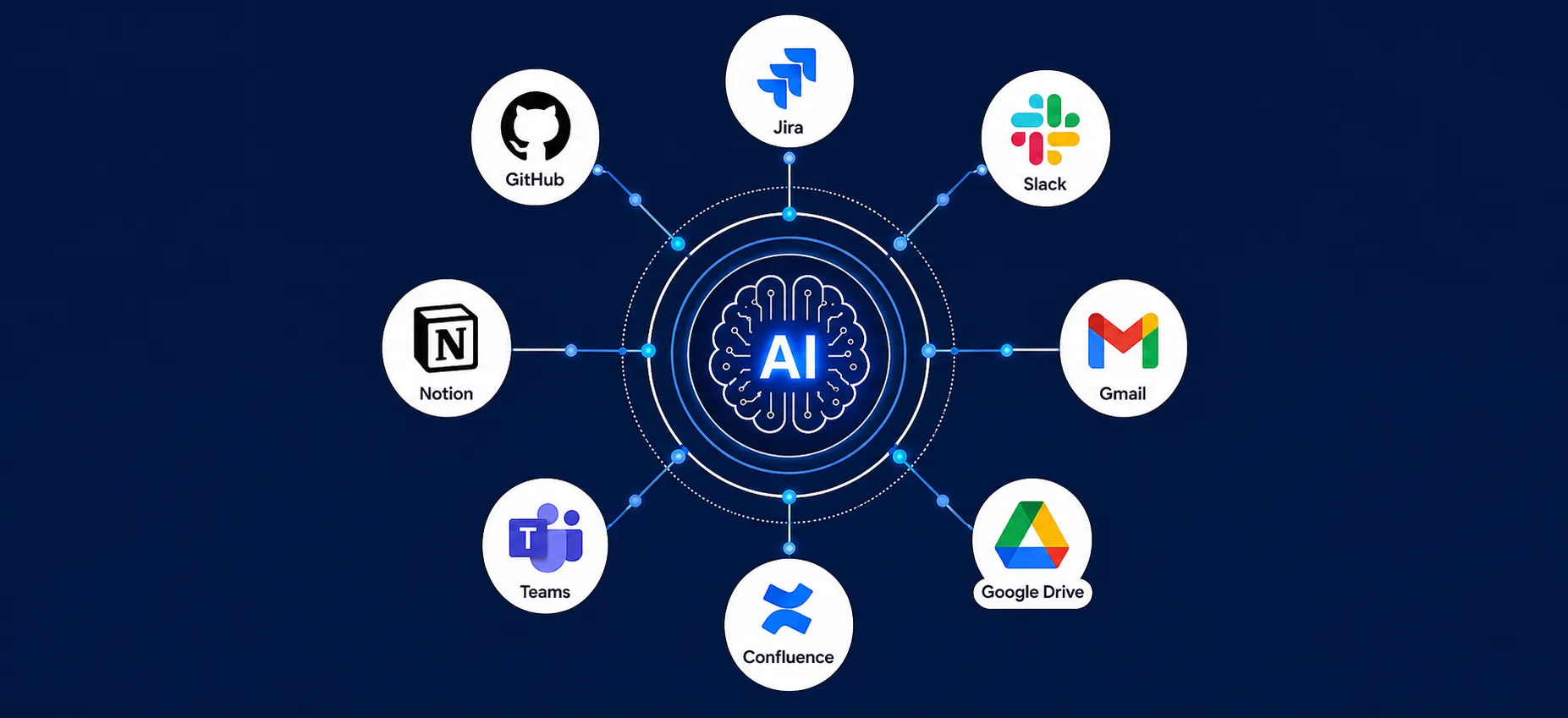
AI Integrations for QA Engineers
Learn how QA engineers can connect AI with Jira, GitHub, Slack, Notion and other tools to improve testing, bug tracking, reporting and QA productivity...
Read More
The Ultimate Guide to Amazon SES Setup with GoDaddy DNS
Learn how to set up Amazon SES with GoDaddy DNS. Complete step-by-step guide covering Easy DKIM, SPF, DMARC, custom MAIL FROM, and exiting the SES Sandbox...
Read More
AWS DevOps Agent Setup Guide with EC2
Learn how to set up AWS DevOps Agent with EC2, CloudWatch, IAM, and Agent Spaces for AI-assisted monitoring, incident investigation, and root-cause analysis...
Read More
We stopped leaving the IDE to design. Here’s our Cursor → Figma flow
Cursor drafts fast, catches gaps early, and still clips fields and breaks layouts. Here's the real pros-and-cons breakdown of our workflow...
Read More
AWS DevOps Agent: How AI is Automating On-Call Incident Response
If you've ever been on call during a production outage, you know how stressful it can be. Alerts start firing, dashboards light up, and suddenly you're jumping between monitoring tools...
Read More
Catch Missing Images Before Deploy: A Simple Pre-Build Script for Next.js
How Omax Tech added a lightweight image validation gate to Next.js 15 builds on Vercel...
Read More
Teach your LLM your design system: Storybook MCP + Amazon Bedrock + Strands
How to stop models inventing buttons and make them build UI from your real component catalog. Most "AI UI" demos look great until you paste the markup into a real product. The fix is not a smarter prompt...
Read MoreReady to Work With Us?
Most engagements start with a 20-minute conversation. No pitch, no pressure - just an honest discussion about what you're building and whether we're the right fit.